
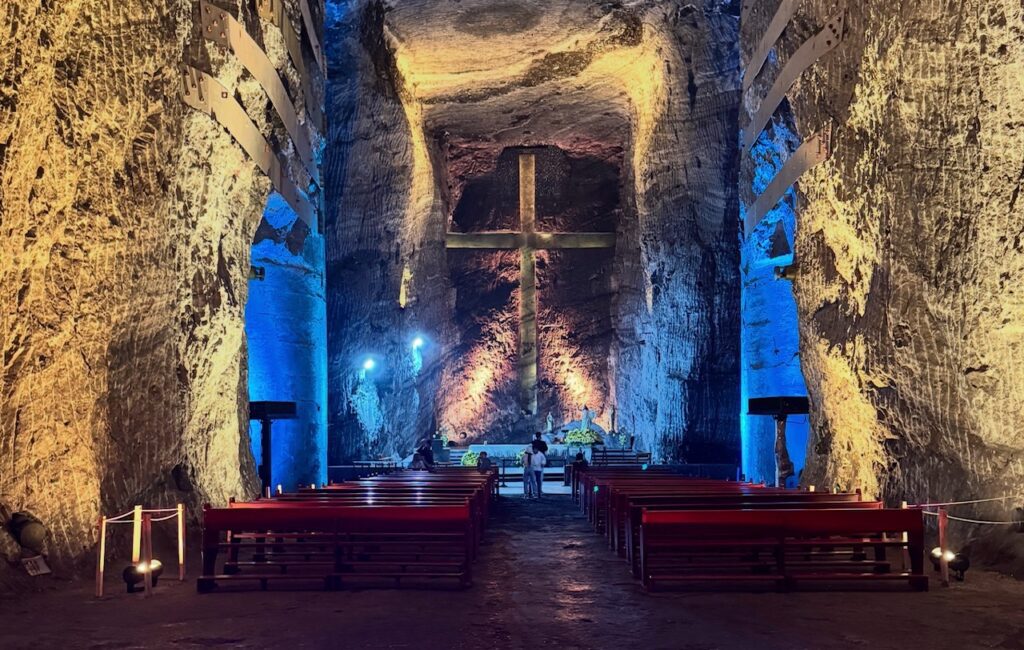
Image: The Salt Cathedral in Zipaquira, Colombia.
Highlights
– How to visit the Salt Cathedral in Zipaquira as a day trip from Bogotá, Colombia.
Time of Visit: March 2026
Duration of Visit: Day Trip from Bogotá
Description
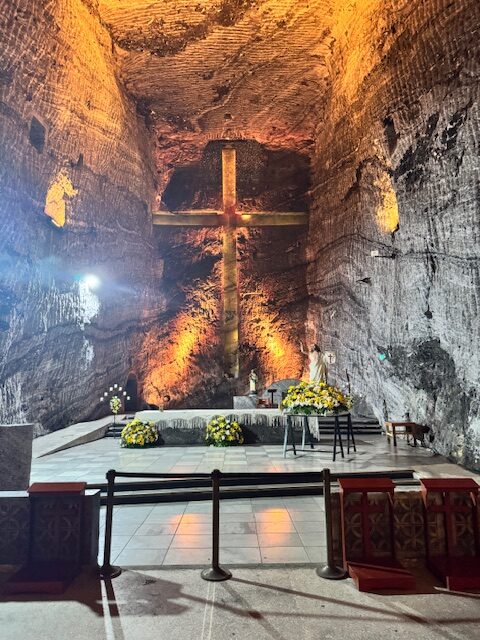
The Zipaquirá Salt Cathedral is a huge cathedral carved inside a former salt mine. It officially became a UNESCO World Heritage Site in 2026. The cathedral has three chambers with the middle or main chamber housing the altar. The main chamber’s head space is about 59 ft (18 m), its width is about 30 ft (10 m) and its length is about 246 ft (75 m). The cathedral’s focal point is a monumental cross carved into the halite rock (rock salt) wall that measures over 52 ft (16 m) high.
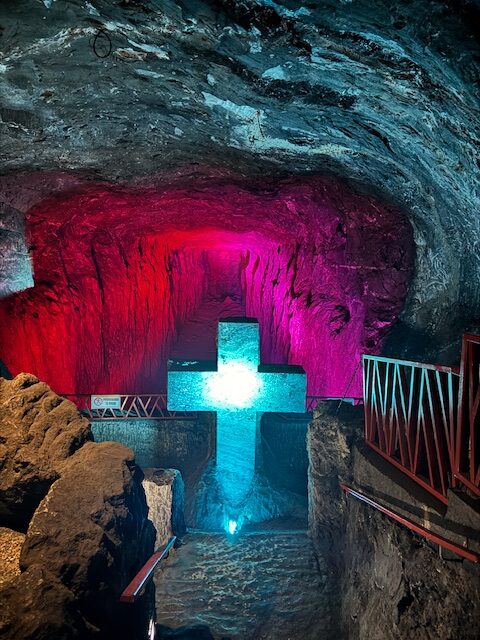
The cathedral is built approximately 200 ft (61 m) underground. A long tunnel leads to the cathedral. Along the tunnel are the 14 stations of the cross. The path, stations and the cathedral are colorfully illuminated. Within the salt mine are gift shops, restaurants, a jade museum and even an Egyptian museum. The Egyptian museum actually has decent replicas of archeological relics that we have seen in Cairo and Luxor.
The initial purpose of the underground sanctuary traces back to the 1930s. Miners carved makeshift altars into the rock walls to pray for safety and protection before beginning their dangerous shifts. The official cathedral was built to formally honor Our Lady of the Rosary, the patron saint of miners. Today, the site functions simultaneously as a holy Roman Catholic place of pilgrimage for Sunday worship and as a tourist attraction. You can find more information about the Sunday mass service at this unique venue at the Zipaquirá Salt Cathedral official website.
Activities
Salt Cathedral Tours
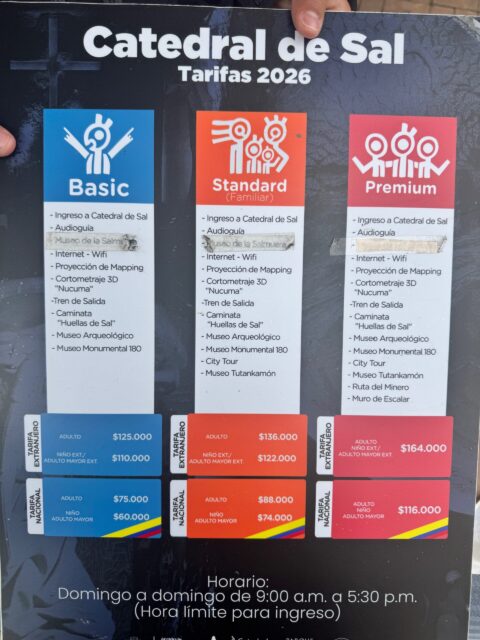
There are three types of tours offered in the Salt Cathedral. These are the Basic, Standard and Premium. These are self guided tours with the aid of an audio guide. Numbers are posted at different locations throughout the mine so you can select the corresponding recording on the audio guide. All tours also include a train ride out to return to the Salt Mine Park entrance.
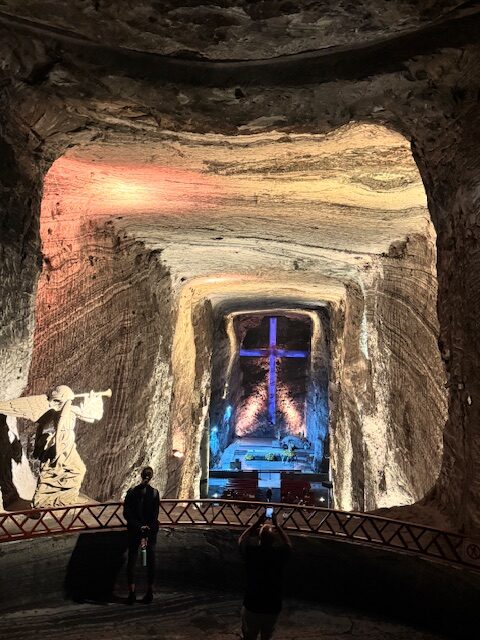
If you are just interested in seeing the salt mine and the cathedral within the mine, then Basic is all you need. This tour normally takes two hours but it can be shorter or longer depending on how long you linger at one location. Visitors are allowed to linger in the salt mine as long as they want.
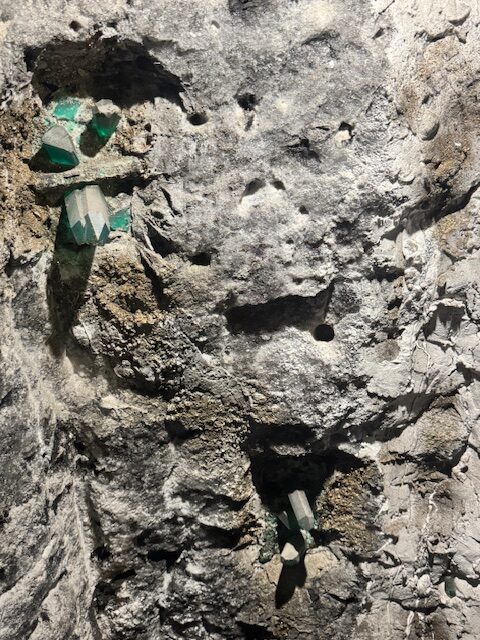
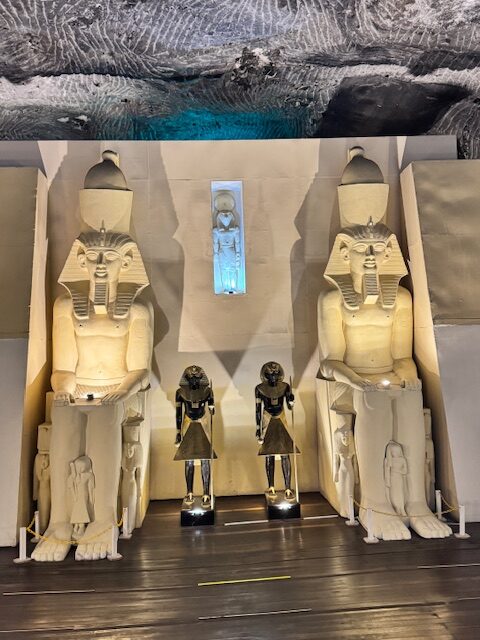
The Standard has all the Basic plus the Egyptian Museum and a city tour. We chose the Standard because the price increase from the Basic Tour was minimal in our opinion. The Egyptian Museum actually has a decent replica displays of Egyptian artifacts that looked closely similar to the ones we saw at the Great Egyptian Museum (GEM) in Cairo and the archeological sites in Luxor.
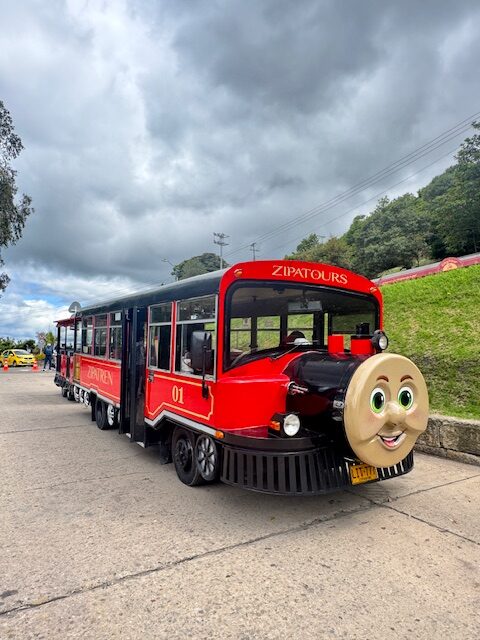
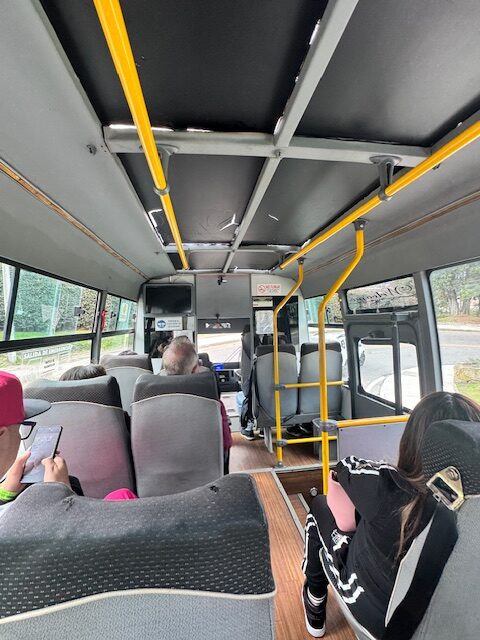
The City Tour was not really a tour but rather a ride back to theZipaquirá town square with a pre-recorded narration in Spanish (mainly) of what to look for. For us, the ride was leg saver as it is quite a downhill walk from the salt mine to the town square. We spent about three hours at a leisurely pace on the Standard Tour from entering the mine to getting dropped off at the center of town after the City Tour. It was actually quite tiring to walk in the salt mine.
The Premium tour includes a guided walk through the Miner’s way which is within the salt mine. This tour normally takes about four hours.
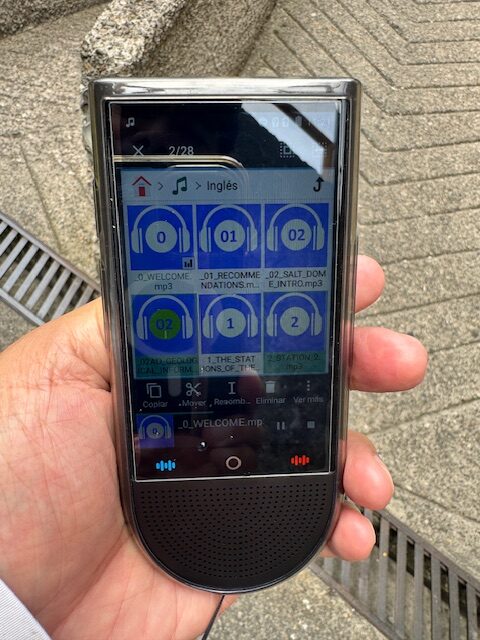
All tours include the use of an audio guide in different languages
What We Would Have Done Differently
We should have left Bogotá earlier so we had more time to explore the town ofZipaquirá. Getting done with the Standard Tour at around 3PM did not provide enough time to casually walk around the town’s historic center for further explorations while being able to return to Bogotá before dark.
While on the City Tour bus, we noticed the striking Spanish Colonial architecture, the Plaza de los Comuneros (also known as González Forero Square), the stone-façaded Diocesan Cathedral at the plaza and the vibrant, buttery-yellow Palacio Municipal. The area around the plaza was pedestrian only and packed with artisanal shops, restaurants and lively cafes.
How To Get There
It involves two bus rides to get to the town of Zipaquirá from Bogotá. At Zipaquira, we took a taxi to the Salt Mine Park entrance instead of walking about 15 minutes on a slight uphill through the old part of town.
Getting to Portal del Norte
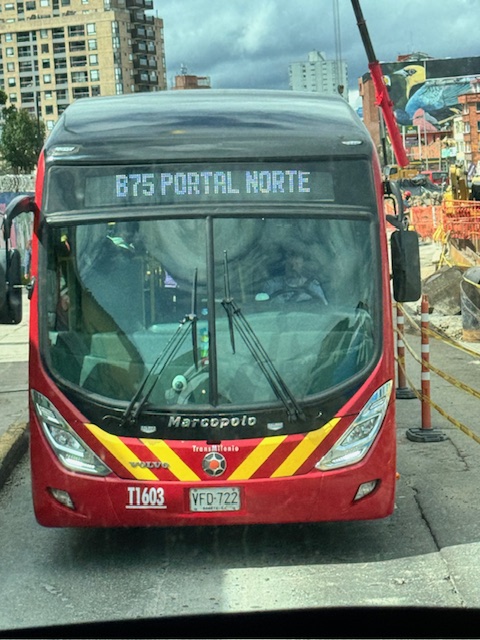
The first bus ride was getting on a TransMelanio articulated bus that took us to Portal del Norte. Portal del Norte is the northernmost bus stop in Bogotá. TransMelanio operates like a subway but above ground. It’s a fixed fare and you can get off and get on different buses without having to pay a fare as long as you do not exit the station.
You will need to purchase a reloadable card first and load it with the correct amount of funds to enter a station. We purchased our reloadable card a day before we went. We only needed one card. All we had to do was tap it twice at the turnstiles (for two people).
Portal del Norte to Zipaquirá
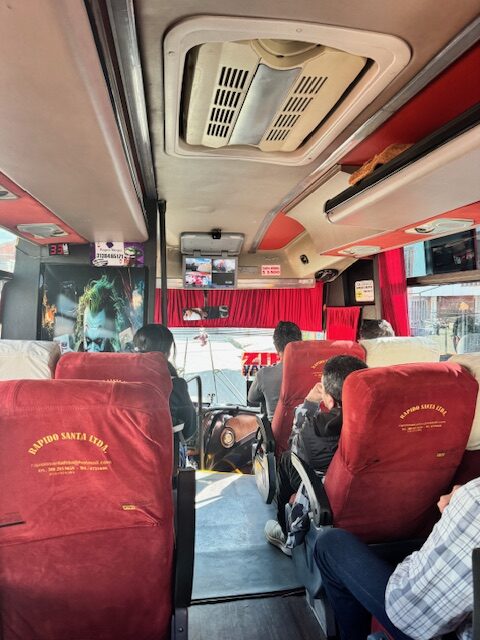
There are several intercity buses at Portal del Norte. Just look for a bus that has a Zipaquirá sign in front. We did not know that the bus route is about a mile away from the Salt Mine Park. Luckily our bus driver figured we were “gringos” and he dropped us off early instead of getting off at the main bus terminal which is further away. So in case your bus driver was not paying attention, you need to tell him or her that you want to go to the “mina de sal” so you can be dropped off at Parque La Esperanza which is at the corner of Carrera 16 (the bus route) and Calle 4 (the road to the old town and the mine).
Zipaquirá to Salt Mine
We took a taxi from Parque La Esperanza to the Salt Mine Park entrance. The cost was minimal and well worth skipping the 15 minute slightly uphill walk to the park entrance.
Tip
Getting to Portal del Norte is the easy part. All you have to do is ride a TransMilenio bus that has a Portal del Norte sign. Coming back is the hard part because not all TransMilenio buses stop at every station. So you have to know which bus line stops at the station you need to get off.
The good thing about TransMilenio is that it acts like a subway. You do not have to pay again unless you go past the turnstiles. As long as you are within the station, you can ride any bus in either direction. So if you miss your stop, just get off at the next station and take the next bus going the other way. Just make sure the bus you get on does stop at the station that you need to get off.
Where To Stay
Arguably, it would be better to stay in Zipaquirá if your purpose is to see the salt cathedral. It is a more relaxing environment than Bogotá.
But if you want to stay in Bogotá, choose a location that is within walking distance to a TransMilenio station to avoid adding another ride to what is described above. We stayed at the Holiday Inn Express & Suites that was about a 15 minute walk to the Flores TransMilenio Station in Bogotá.
How To Get Around
All you need are your legs to explore the salt mine with the exception of the train ride (tren de saida) to get out of the mine.
The transportation between Bogotá and Zipaquirá are explained in detail above.
Expected Expenses
TransMileanio reloadable card – 8,000 COP ($2.2 USD), cash only
Single TransMileanio ride between Flores and Portal del Norte stations – 5,000 COP ($1.38 USD), cash only
Bus between Bogotá and Zipaquirá – 11,500 COP ($3.17 USD), cash only
Taxi from Parque La Esperanza to Salt Mine Park – 8,000 ($2.20 USD) COP
Salt Mine Tours – see photo above
Stay Informed
If you want to be notified when we post a new travel story, please enter your email below. We respect your privacy. Your email is used only to notify you of new posts and is never sold or shared with third parties. You can unsubscribe at any time.
Summary
The Zipaquirá Salt Cathedral is a tourist destination because of its unique architectural and engineering marvel. Formally recognized as the “First Wonder of Colombia,” this Roman Catholic church is carved entirely out of a halite rock in a salt mine 656 ft (200 m) underground.
Beyond its physical grandeur, the cathedral has a deep spiritual atmosphere. Fourteen Stations of the Cross that feature dramatic, hand-carved stone reliefs lead to the three chambered cathedral. The mine is illuminated by a state-of-the-art LED lighting system that casts ethereal blue, purple, and gold hues over the jagged rock surfaces, creating a mystical, meditative environment.
The Zipaquirá Salt Cathedral is truly a unique destination. It is a must visit and easy day trip from Bogotá.