
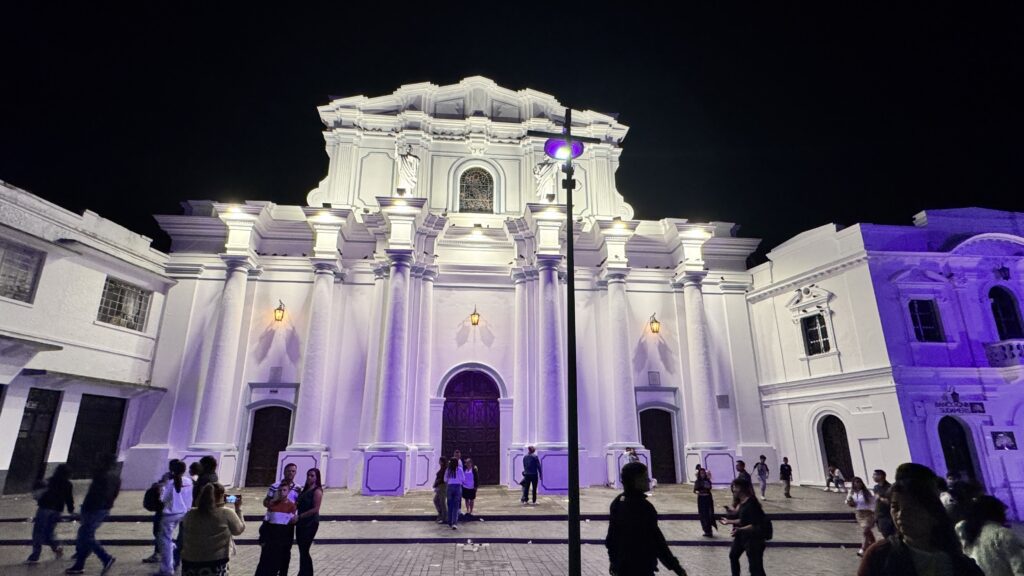
Image: Catedral Nuestra Señora de La Asuncion at Parque Caldo, Popayan, Colombia.
Highlights
– What we experienced in spending part of the Holy Week in the white city of Popayan, Colombia.
Time of Visit: April 2026
Duration of Visit: Four Nights
Description
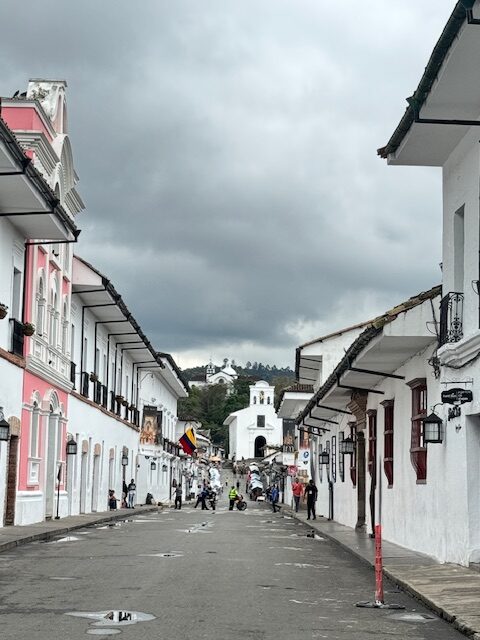
Popayan is a town about five hours by bus south of Cali. It is famous for its colonial white buildings and Semana Santa (Holy Week) processions. This tradition dates back to 1556 so it is 470 years old and is a recognized as a UNESCO Intangible Cultural Heritage. Popayan holds parades and processions during the entire Holy Week (from Palm Sunday to Easter). The parades and processions are mainly held in the evening, except for Easter which was during the day.
There is a strong police and military presence in the old part of the city which is where the parade and processions are held. Streets are closed to vehicular traffic which allows people to wander around.
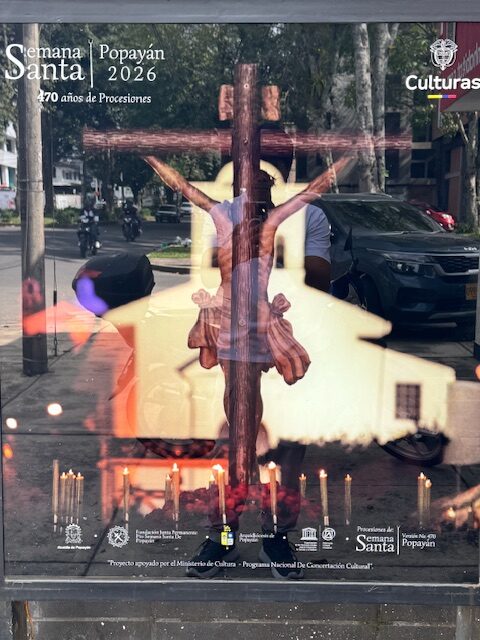
The parade and processions are made up of bands and bearers (cargueros)) carrying heavy wooden platforms (pasos) bearing religious statues on their shoulders. During Holy Thursday and Good Friday, there was even a choir singing while parading and an orchestra on wheels. Locals indicate that Holy Thursday and Good Friday are the most important.
Here, we describe what we witnessed during our stay in Popayan from Holy Thursday to Easter.
Activities
Popayan Holy Week Procession App
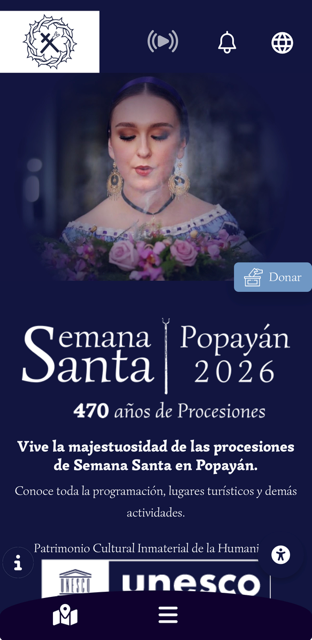
Popayan has a mobile app that lists the procession times and route for the entire Holy Week.
This app can be downloaded by going to the website www.procesionespopayan.com. Once on the website, select the square with an arrow icon at the upper right corner. Then choose “Add to Home Screen” and “Add”. This will allow the app to appear as an icon on mobile devices.
The app shows the procession start time, starting point and route for each day. These can be different for each day.
Conduct During Procession
People are expected to be quiet during the procession. If you need to speak, do it softly or you may get an earful from the locals. It is a solemn event so visitors are expected to be respectful.
Holy Thursday
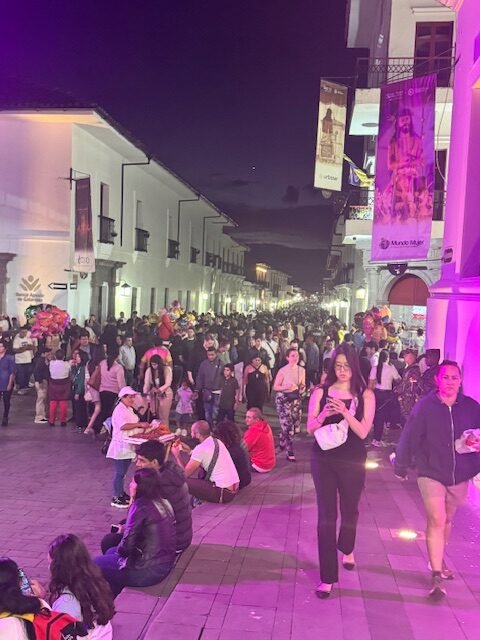
The roads were already closed when we arrived at 6PM. There were many people walking up and down the streets. There were also street vendors.
Somehow, we ended up at Calle 4 at the north side of Parque Caldas, the town’s main square. There were grandstands erected here. The grandstands were free to the public but it was on a first come first served basis. There was a person at the grandstand entrance registering spectators who wanted to secure seats. We had to show a photo of our passports to register.
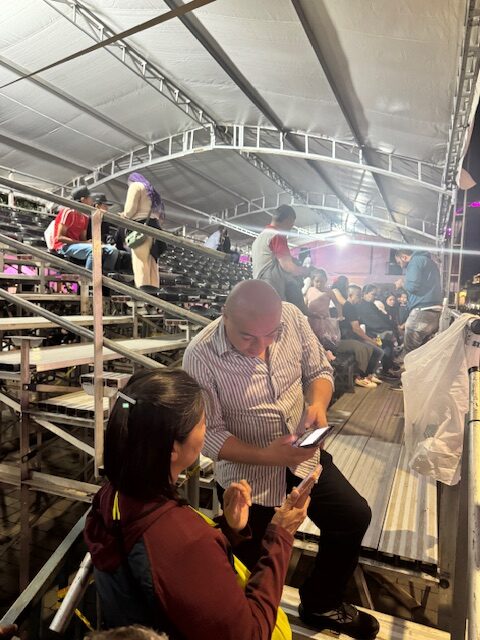
We were at the grandstands at 7PM and were able to secure front row seats. By 8PM the grandstand was getting full. The procession started at 8PM but it did not pass the grandstand until 10:30 PM as we were at the tail end of the route that evening. The last “paso” passed just before midnight.
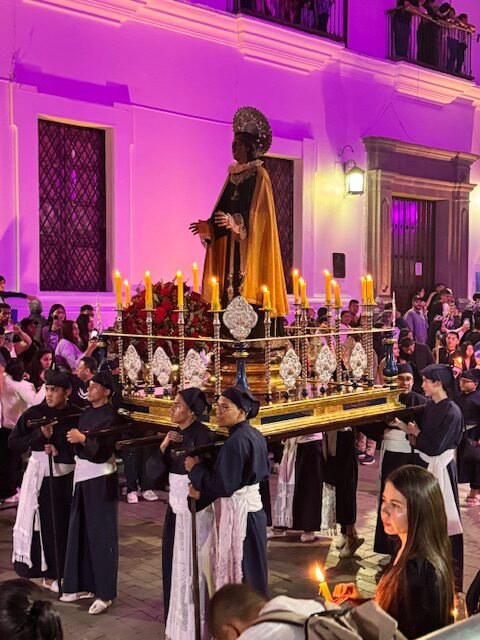
There were a couple of marching bands with drums, xylophones and wind instruments. They played “Alleluia” and Simon and Garfunkle’s “Sound of Silence”. There were 17 floats that devotees carried.
The city provided porta potties and a first aid station in Parque Calda.
Good Friday
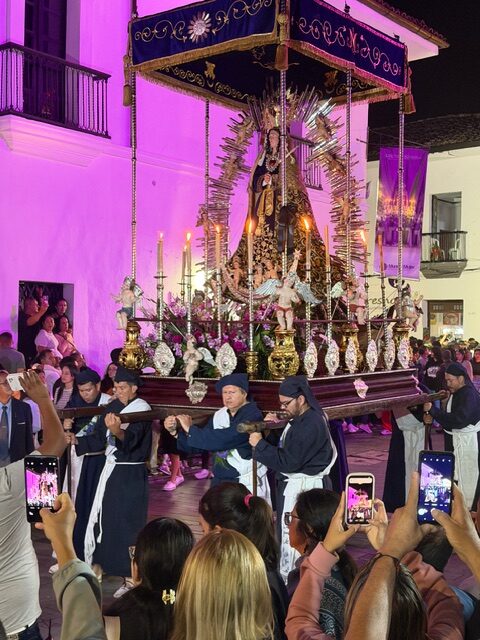
The Good Friday procession had a few differences to Holy Thursday. The procession had a different starting point than the previous night. This time it was closer to Parque Calda so we were able to witness the procession earlier.
Another difference was that the “cargueros” wore their sashes across the body instead of around the waist. Some of the “pasos” were different also but not as many as Holy Thursday. The procession lasted just over an hour.
Holy Saturday
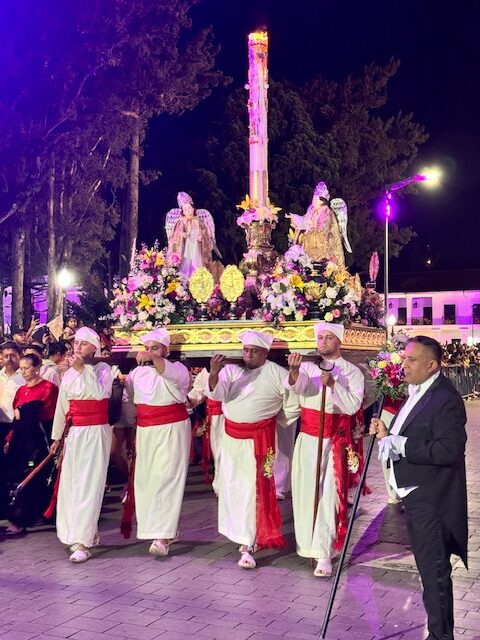
The Holy Saturday procession started around 10:30 PM. This procession is shorter with lesser “pasos” and fewer bands compared to the previous two nights. But the “pasos” were different. The “cargueros” carrying the “pasos” were also dressed differently. This time they wore white gowns with red sash across their waists. Some of the bystanders were also allowed to carry the “pasos” part of the way.
The procession lasted about 45 minutes.
Easter
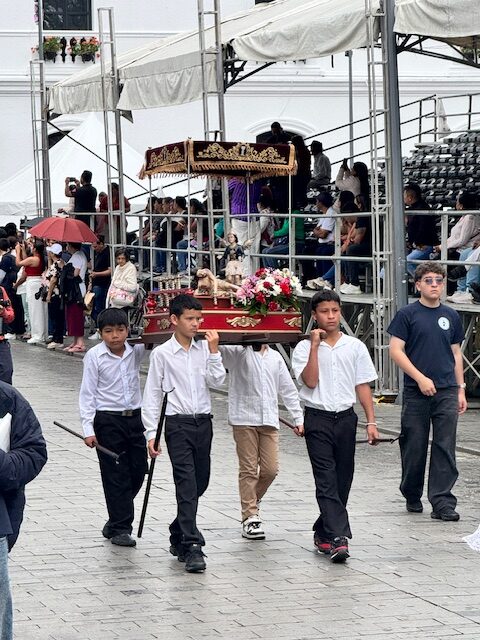
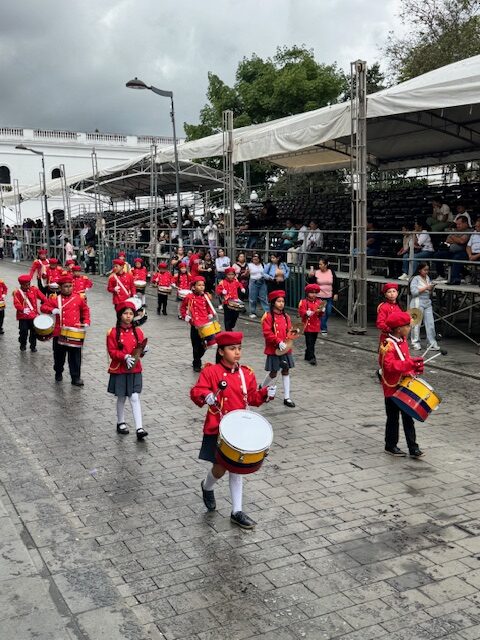
Easter mass services were held at the different churches in the morning.
After the masses, a small procession was held around Parque Calda around 10:30 AM. The participants were children in cute band outfits. There were also small “pasos” carried by the children.
How To Get There
Popayan has an airport, code PPN. This is the easiest way to get to Popayan as it is far from Bogota, Cartagena and Medellin.
There are buses such as TransIpiales that go between Cali and Ipiales that stop at Popayan.
Where To Stay
Popayan is a sizable city. Staying near or around Centro (Parque Caldas) would be very convenient to be close to the processions.
How To Get Around
We just walked to Centro from our accommodation which was less than 10 minutes walk from the airport. We felt safe walking at night back to our accommodation as there was a strong police and military presence in the area.
There are taxis in Popayan but did not have the need to use one.
Expected Expenses
We did not incur expenses in watching the processions.
Stay Informed
If you want to be notified when we post a new travel story, please enter your email below. We respect your privacy. Your email is used only to notify you of new posts and is never sold or shared with third parties. You can unsubscribe at any time.
Summary
The processions during Semana Santa in Popayán, Colombia, is a world-renowned religious celebration that is 470 years strong. It is a recognized UNESCO Intangible Cultural Heritage. Held annually in the “White City,” these nightly processions commemorate the passion and death of Jesus.
The processions are solemn and candlelit and accompanied by bands and sometimes an orchestra.The highlight features “cargueros” carrying heavy “pasos” bearing religious statues on their shoulders. Processions are held everyday during Semana Santa. Thousands of spectators line the streets in silence, creating a deeply spiritual atmosphere, with the most significant processions taking place on Holy Thursday and Good Friday.