
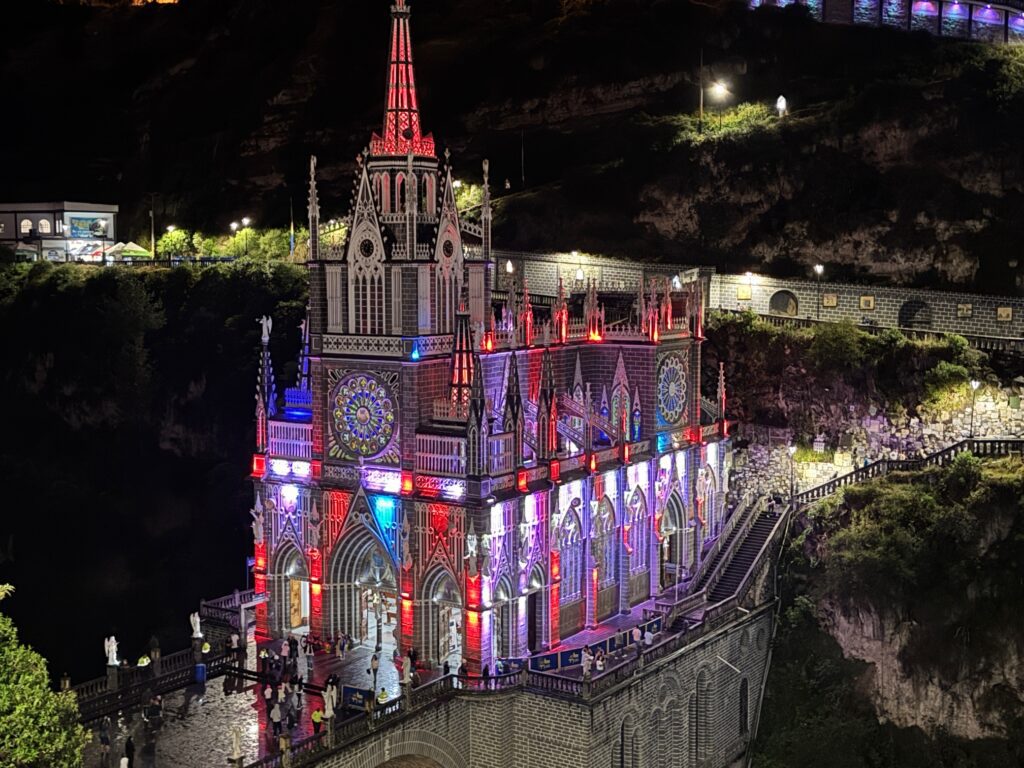
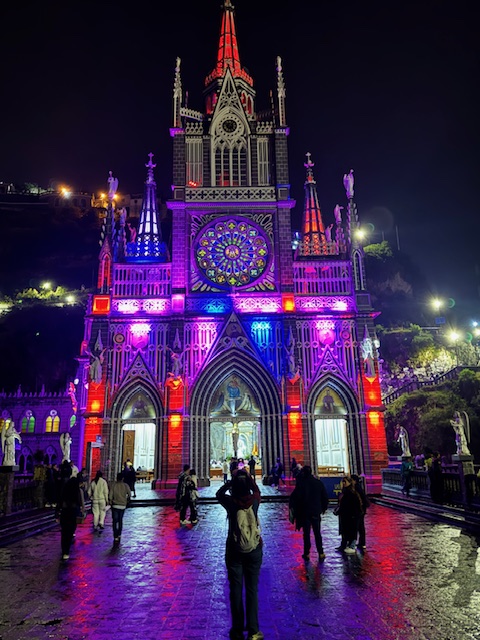
Image: The Santuario de Nuestra Señora del Rosario de Las Lajas at night.
Highlights
– How to visit the Las Lajas basilica (sanctuary) in Ipiales, Colombia and Tulcan cemetery in Ecuador as a day trip from Pasto.
Time of Visit: March 2026
Duration of Visit: Day Trip for Pasto, Colombia
Description
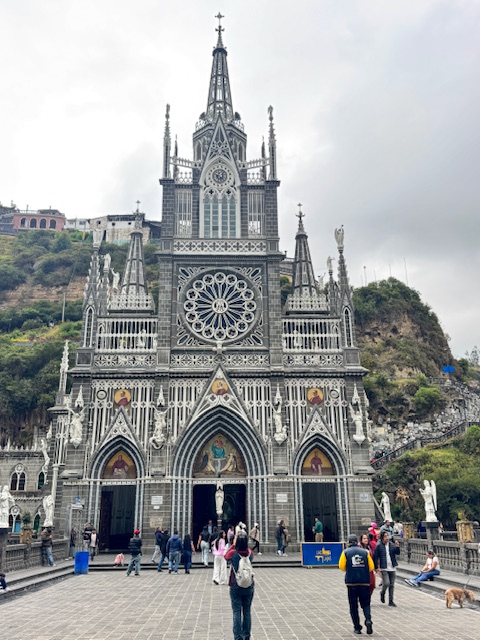
The Santuario de Nuestra Señora del Rosario de Las Lajas (Las Lajas for short) and Cementerio Jose Maria Azael Franco Guerrero are two popular destinations near the Colombia-Ecuador border.
Las Lajas is a Neo-Gothic structure nestled in a deep canyon in Ipiales, Nariño, Colombia. Its towering spires, arched ceilings and colorful stained glass walls reminded us of similar basilicas in Europe.
The sanctuary is built on a stone bridge that spans the gorge carved by the Guáitara River.
The sanctuary commemorates an 18th-century legend where the Virgin Mary appeared to a woman and her deaf-mute daughter, Rosa, who was resurrected from the dead after falling ill. Because of this legend, it is known as the “Miracle of God over the Abyss” and is one of the most important religious and pilgrimage sites in Colombia. The church’s setting in a rugged gorge makes it a highly popular, photo-worthy destination often described as one of the most beautiful in the world.
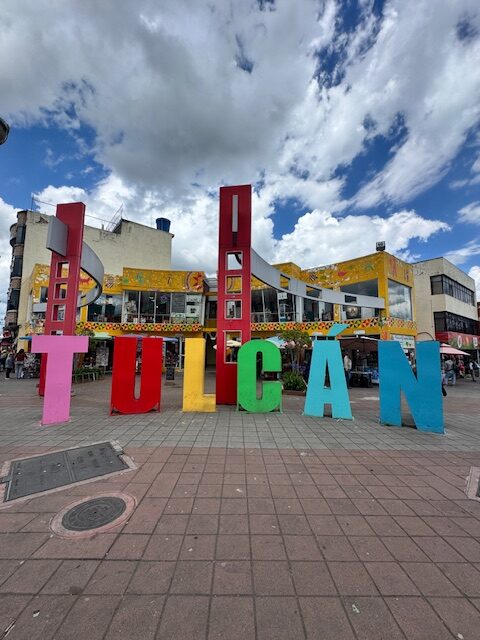
Only a few miles from the border on the Ecuadorian side, lies the Tulcán Municipal Cemetery. It is officially named José María Azael Franco Guerrero Cemetery. Visitors flock to this cemetery because of its stunning topiary art, initiated by its namesake in 1936. The cemetery spans eight hectares (20 acres). It has over 300 meticulously trimmed cypress trees that represent images and shapes of animals and mythological figures. Tulcan Cemetery is a peaceful site that captures the spirit of “art and nature” combined.
Activities
We visited Las Lajas and the Tulcan Cemetery as a day trip from Pasto. Here, we describe how we visited the two sites. We visited the Tulcan Cemetery first so that we could be at Las Lajas in the evening for the colorful and changing exterior lights.
Ipiales, Colombia is the city that is near the Colombia-Ecuador border. To visit Las Lajas and the Tulcan Cemetery, visitors must first reach Ipiales.
Pasto to Ipiales
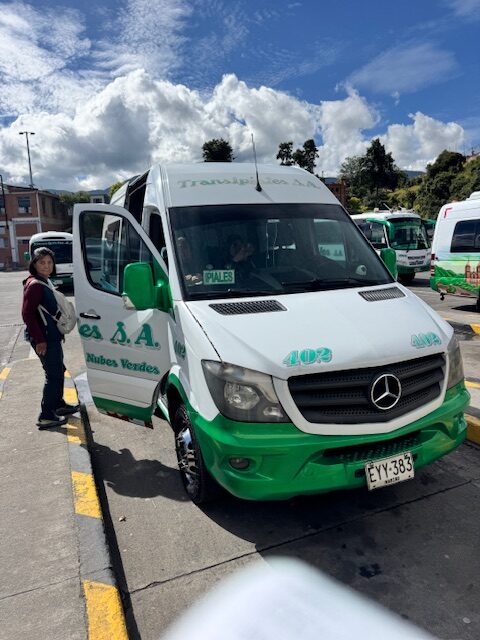
There are several bus companies that go between Pasto and Ipiales. We chose TransIpiales as their staff looked professional because they wore uniforms and their fleet of buses and Sprinter vans are newer and well kept. Plus their drivers always provide a short “briefing” (including trip duration, optional seat belt use and expressing thanks) before hitting the road. They are the only bus company that we rode in Colombia that did this.
The journey between Pasto and Ipiales starts and ends at the Terminal de Transportes in each city. The ride takes about two hours. The road is mainly two lanes, undivided and through the mountains. It can be slower during the day, especially if there is a cargo truck ahead. However, the mountain scenery makes the time go by quickly.
Going to the Border
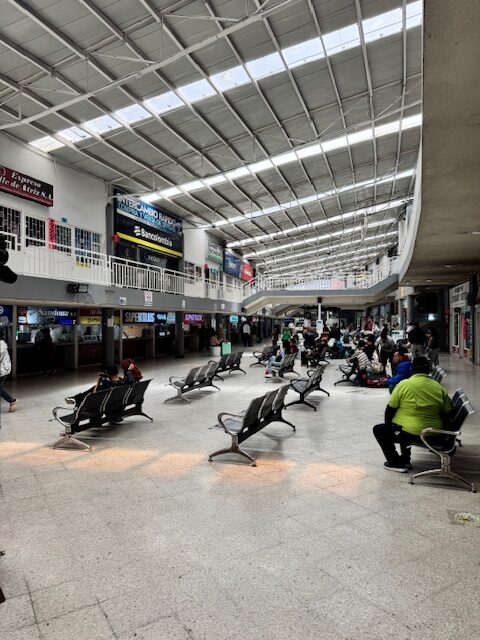
At the Ipiales Terminal de Transportes, we first went to the TransIpiales counter to verify the last trip back to Pasto (we were told 9:30 PM). Then we took one of the Supertaxis at the terminal to the “fronterra”. The ride only took about 10 minutes.
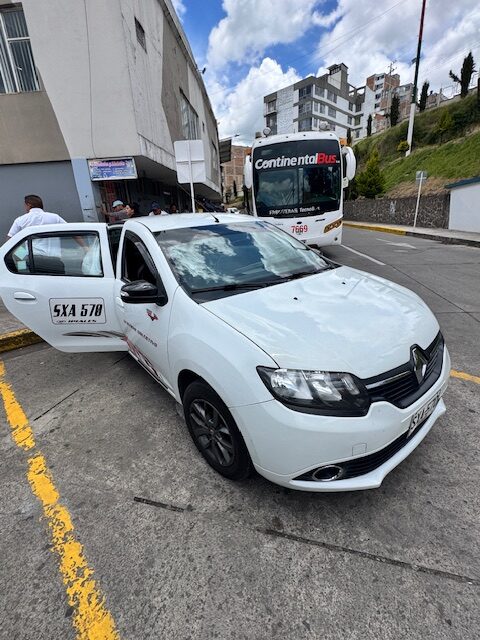
What surprised us was that the taxi crossed the border without stopping at immigration. We were dropped off essentially on Ecuadorian soil. The Supertaxi driver said that we did not need to go to immigration if we were just in Ecuador to see the cemetery.
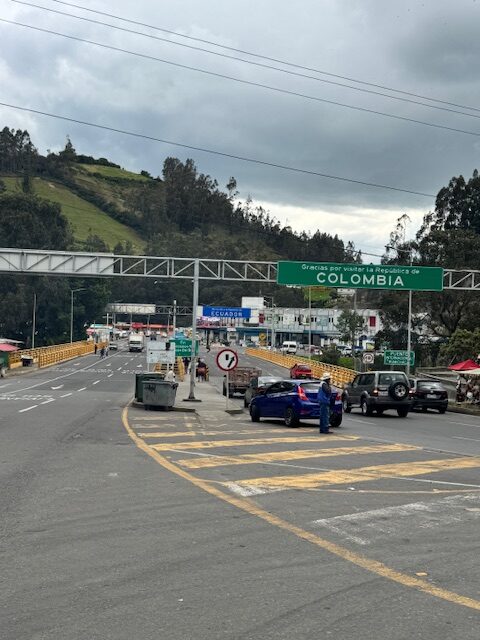
Border to The Cemetery
There are two ways to get to the cemetery from the border – the yellow taxi or a “collectivo”. A taxi is faster as it does not need to wait for other passengers. Plus you get dropped off at the cemetery entrance. However, the driver that we got was not honest and we paid much more than we should have (this was according to the waitress we talked to in Tulcan).
The cheapest way is to ride the “collectivo” which are minivans. We rode the collectivo from the cemetery back to the border. We just don’t know where to catch them at the border. The disadvantages of a collectivo are that you may have to wait for one, it may have to wait for other passengers and you will get dropped off at the plaza. But the cemetery is less than 10 minutes walk from the plaza.
Tip: Ecuador uses the US dollar as its local currency. So make sure you have small bills and even coins to pay for rides, entrance to the cemetery and local eateries.
At Tulcan Cemetery

There is now a minimal entry fee to enter the cemetery (before it was free). They asked for our name, passport number and country of citizenship. They print this information on the entrance receipt.
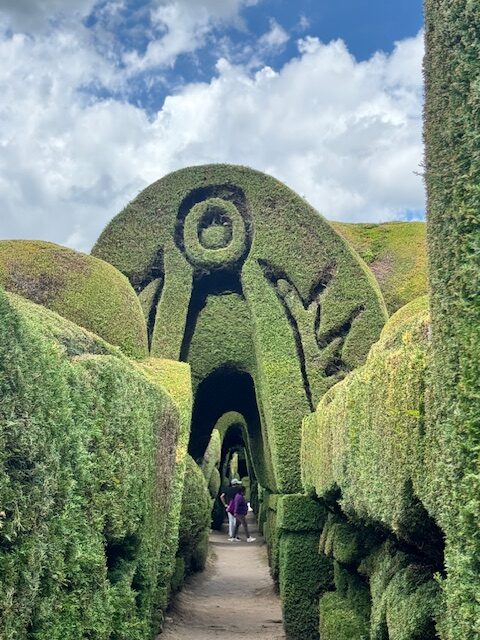

We explored the cemetery on our own. There are no guides. One of the cemetery employees said that it takes between five and six months to make the round in trimming the hedges. So make sure that you visit every corner as some hedges are due for a haircut, others are getting one and the rest are in between.
Do not miss out on some of the colorful murals too.
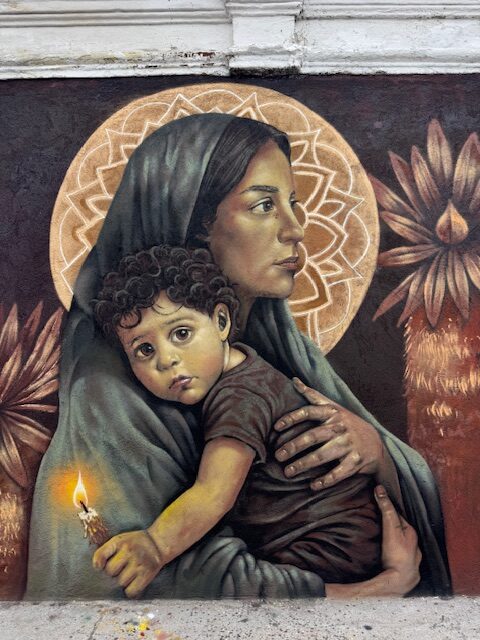
Tulcan to Border
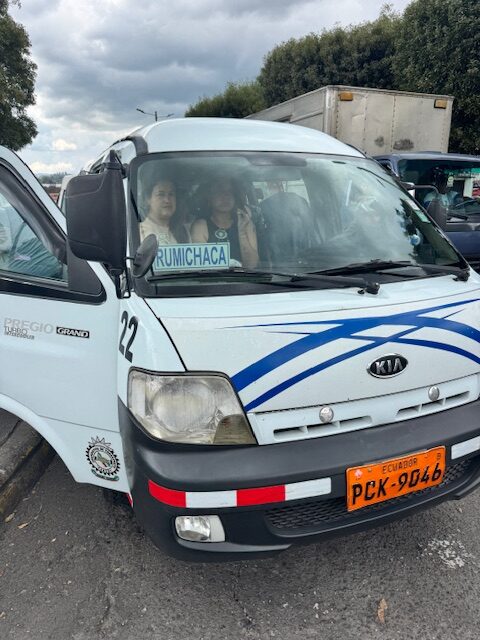
The “collectivos” are parked at the southeast corner of Parque Ayora where Avenida Bolivar and Venezuela streets meet. The driver asked us if we needed to stop at immigration. We said no. Everybody was dropped off at the Colombian side (past the international bridge) where the Ipiales “collectivos” and Supertaxis were waiting. So it was a smooth transition – get off one collectivo and get in another with just a few steps.
Border to Las Lajas
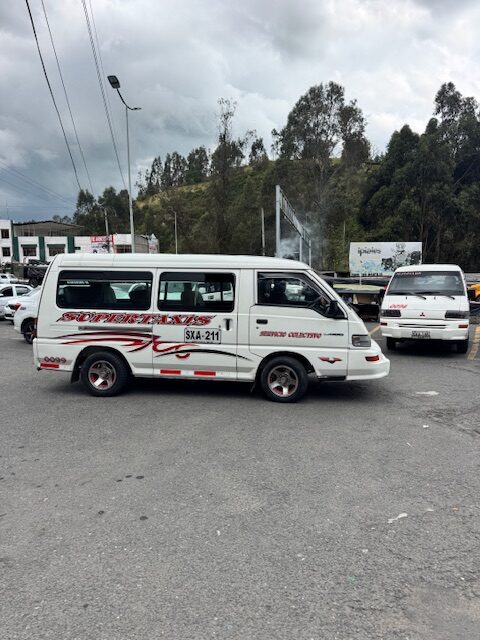
We did not see any Ipiales “collectivos” that go between the border and Las Lajas. Supertaxis do go but you will end up paying much more (see Expected Expenses paragraph). So we took a “collectivo” back to the Ipiales Terminal de Transportes and then took a Supertaxi from there to Las Lajas. You can also take a “collectivo” to Las Lajas but we were ushered into a taxi as it was the one in the queue.
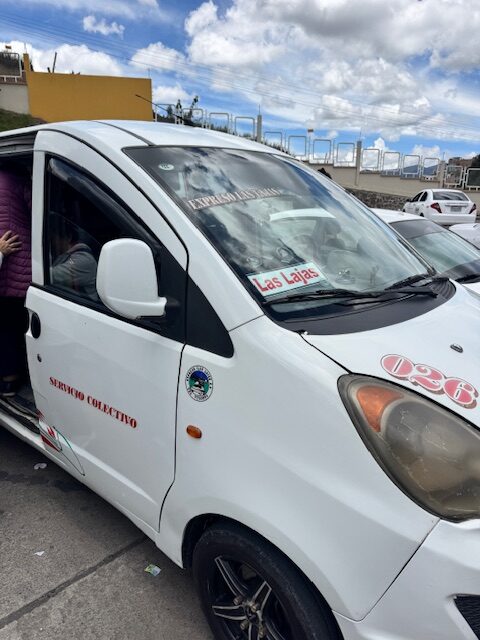
Once you are on your way to Las Lajas, you can either get off at the teleferico (cable car) station or at the “collectivo” station. The teleferico involves a short uphill walk to the station then a short downhill walk to the basilica. The walk from the “collectivo” station to the basilica is about 600 meters (0.4 miles) all downhill with some steps. We chose to get off at the “collectivo” station so we know where to go after visiting the basilica to get back to the Ipiales Terminal de Transportes.
The Sanctuary (Basilica)
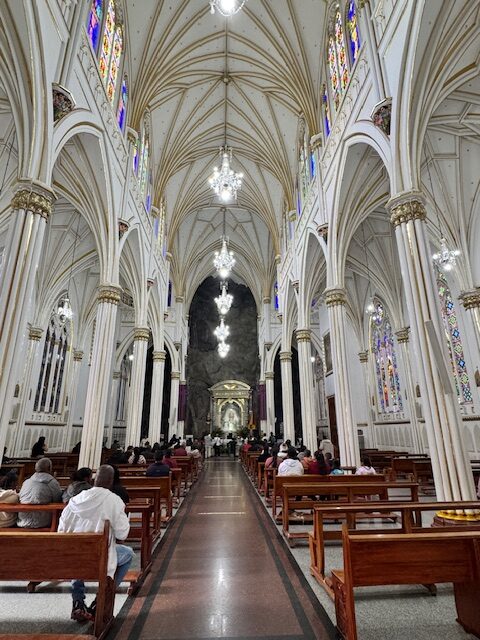
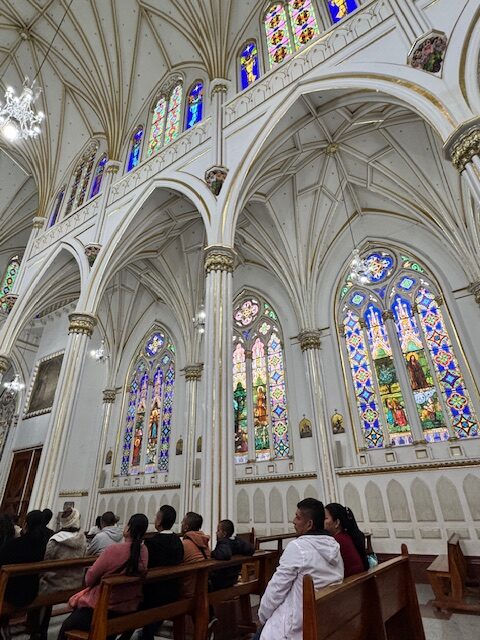
We admired the basilica from both the inside and outside.
The stained glass windows are just stunning as well as the arched ceiling. Perhaps what is most unique is that the basilica was constructed around a natural rock wall. This natural rock wall is the altar wall with the image of the Virgin Mary painted on the slab (laja) that acts as the central point of the sanctuary.
Outside, the intricate spires and exterior relief reminded us of churches in Spain and Portugal. The stone arched bridge looked equally admirable. But what made the trip worthwhile were the evening lights that illuminated the basilica’s exterior. These lights change colors after a few seconds.
There was also a strong police presence in the area.
Ipiales to Pasto
We rode the “collectivo” back to the Ipiales Terminal de Transportes. It was almost 8PM by the time we reached the terminal. We bought our return tickets from TransIpiales and rode their VIP overnight bus that stops at Pasto, Popayan and Cali. The VIP bus is very comfortable with a lot of shoulder and leg room. There are only three seats in a row (2 x 1).
How To Get There
Please refer to the paragraphs above for how we got to the Tulcan Cemetery and Las Lajas.
Where To Stay
Though Ipiales would have been a more convenient base to explore Las Lejas and the Tulcan Cemetery, we chose to stay in Pasto. Pasto is more modern compared to Ipiales. Plus we wanted to see the Centro Cultural Pandiaco Museo del Carnaval in Pasto.
How To Get Around
All you need are your legs to get around Las Lajas and Tulcan Cemetery. There are a lot of stairs in Las Lajas to get to different viewpoints with no wheelchair access. Tulcan Cemetery is flat except if you want to tackle steps to get to the top of the structures.
Expected Expenses
All are cash transactions and per person.
TransIpiales: Transit Van from Pasto to Ipiales – 15,000 COP ($4.10 USD), VIP Overnight Bus from Ipiales to Pasto – 20,000 COP ($5.50 USD).
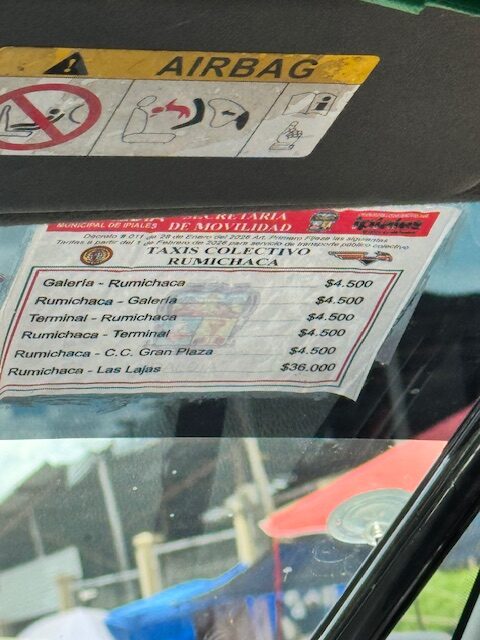
Supertaxi and Collectivo between Ipiales Terminal de Transportes and Colombia-Ecuador Border (Rumichaca) – 4,500 COP ($1.25 USD).
Yellow taxi between Border and Tulcan – the Supertaxi driver said $4 USD for the taxi, our unscrupulous driver charged $4 per person and the waitress at Tulcan said it should be $1 total.
Tulcan Cemetery Entrance Fee – $2.00 USD.
Collectivo between Boder and Tulcan – $0.75 USD.
Supertaxi and Collectivo between Ipiales Terminal de Transportes and Las Lajas – 4,500 COP ($1.25 USD).
Stay Informed
If you want to be notified when we post a new travel story, please enter your email below. We respect your privacy. Your email is used only to notify you of new posts and is never sold or shared with third parties. You can unsubscribe at any time.
Summary
Las Lajasis a must-visit due to its engineering marvel and dramatic setting. Built in the 20th century, the sanctuary spans a deep precipice over the Guáitara River. Its unique architecture and reported miracles associated with the Virgin Mary on the canyon rocks give it a magical atmosphere. It is widely considered one of the world’s most beautiful churches, appearing like a fairytale castle in the middle of a stunning canyon.
Tulcán Cemetery is just minutes from the border. It is also a must visit for its unique, artistic topiary garden. Beginning in 1936, the cemetery’s hedges were intricately sculpted into impressive figures, including pre-Columbian art, animals and geometric shapes. It is considered one of the most remarkable cemeteries in South America, offering travelers a peaceful, artistic, and entirely free experience of local creativity.Las Lajas Sanctuary and the Tulcán Cemetery are unique destinations near the Colombia-Ecuador border.
Both sites provide unforgettable, artistic, and cultural experiences that are a must for any traveler.