
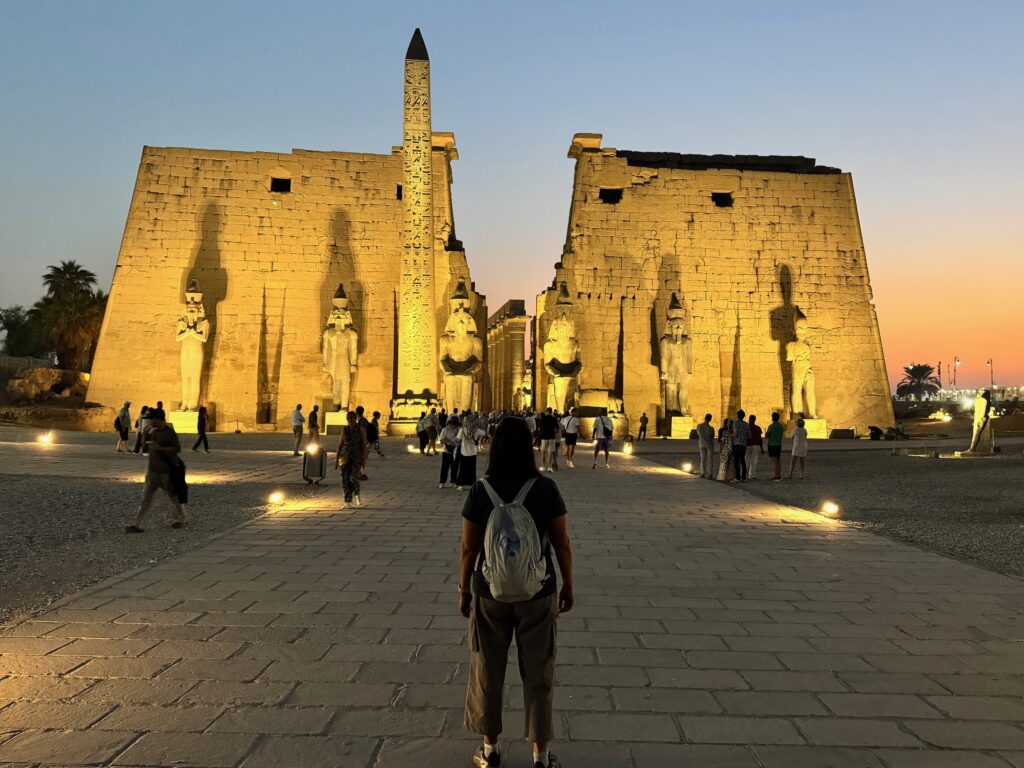
Image: Luxor Temple at night.
Highlights
– Useful information to successfully plan a visit to the archeological sites in Luxor, Egypt.
Time of Visit: November 2025
Duration of Visit: Three Nights
Description
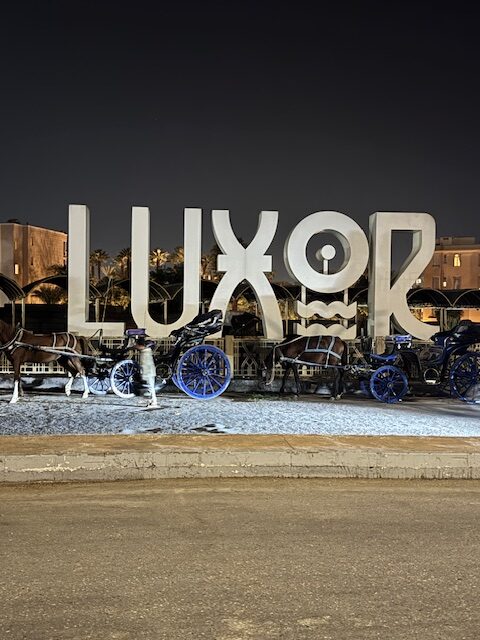
Luxor is often referred to as the greatest open air museum in the world. Indeed it is, as there are several archeological sites that showcase ancient Egypt. We managed to visit seven wonderful sites during our visit. These were (in the order of visit) the Temple of Karnak, Luxor Temple, Valley of the Kings, Hatshepsut, Habu Temple, Deir El Medina and Colossi of Memnon.
We did not visit the Valley of the Queens and the Valley of the Nobles as these were also tombs like the Valley of the Kings.
We briefly describe each of these sites, our impressions and whether it is worth seeing.
Activities
We visited the sites on our own instead of joining a tour group so we could be on our own schedule instead of someone else. There are also independent guides at the Temple of Karnak, Luxor Temple and Valley of Kings that we could have hired if we wanted to know more.
Temple of Karnak
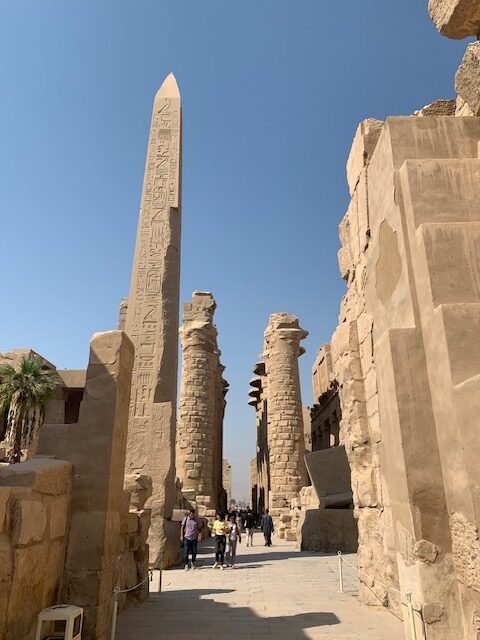
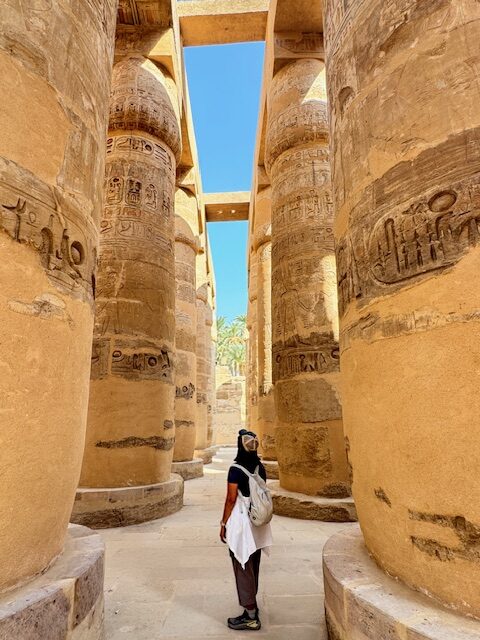
The Temple of Karnak is one of the two temples that must be visited in our opinion. We were blown away by the Great Columns Hall where most people tend to spend the most time. There are also a couple of standing obelisks and structures that have hieroglyphic inscriptions. Arrive as early as you can as the place tends to be crowded.
Time spent: Three hours.
Luxor Temple
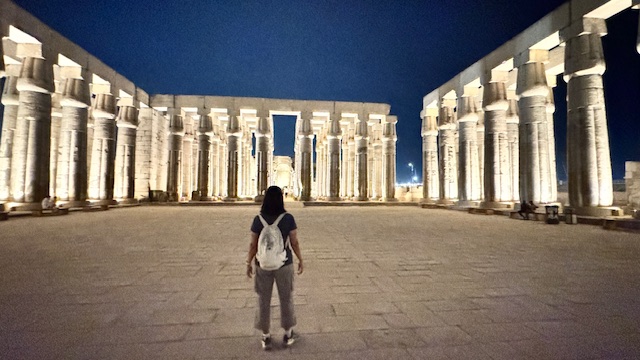
Luxor Temple is the second temple that should not be missed. It looks brown and dull during the day but comes alive at dusk as the site is illuminated. The temple is not very large but you will find yourself spending more time than you think.
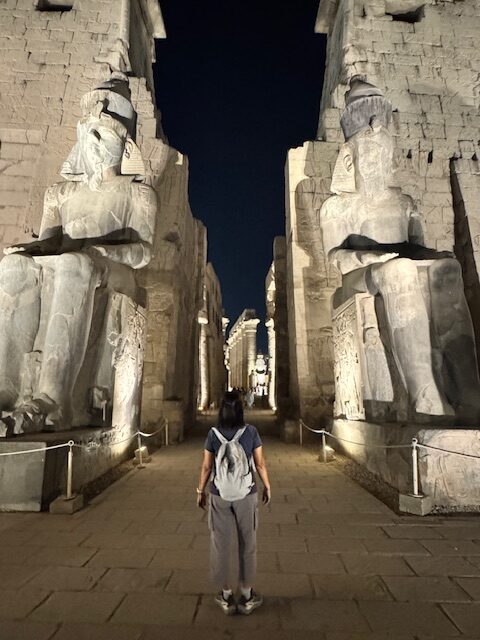
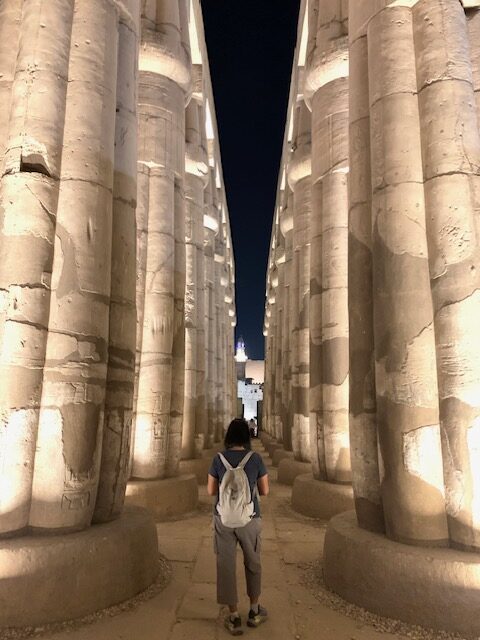
The temple gets busy from dusk to about 7PM which is when the ticket office closes. Everyone is ushered out just before 8PM closing time.
Time spent: Two hours.
Valley of the Kings
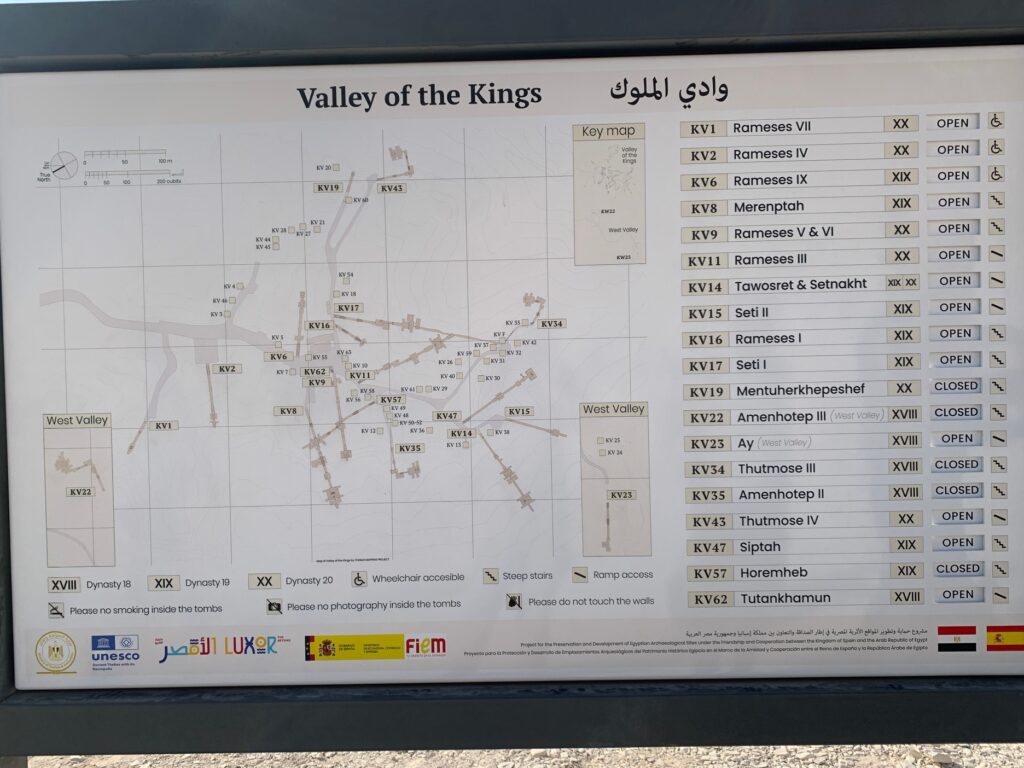
When it comes to tombs, the Valley of the Kings takes the cake. There are several tombs that were dug into the mountain so it can be hidden from thieves. The tombs are identified as KV (short for King’s Valley) followed by a numeric number as well as the name of the person. Tombs of well known pharaohs like Tutankhamun, Rameses and Amenhotep are located here.
The general admission allows visitors to see only three tombs, not including the “premium” tombs which are Ay (KV23), Rameses V/VI (KV9), Sety I (KV17) and Tutankhamun (KV62). These four tombs require an additional ticket to be purchased.
We visited three of the four premium tombs – Rameses V/VI, Sety I and Tutankhamun. Rameses V/VI was totally worth it. The tunnel leading to the tomb is long and hieroglyphics are colorful.
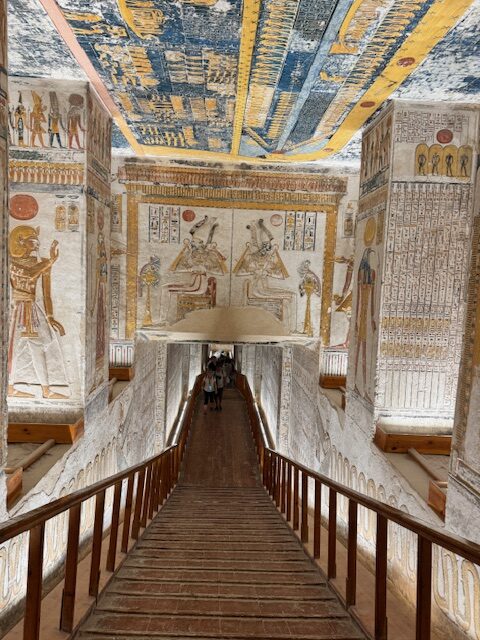
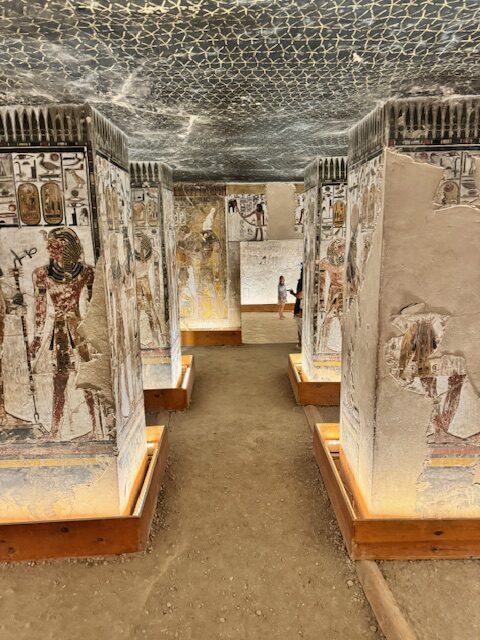
The tomb of Sety I is the most expensive but the largest of all the tombs. It also has well preserved and colorful hieroglyphics and paintings. A lot of people ask if it is worth the admission price. In our opinion, you would not miss much if you have seen Rameses V/VI and Rameses III (KV11) and Rameses IV (KV2) as the hieroglyphics in the tombs tend to be similar.
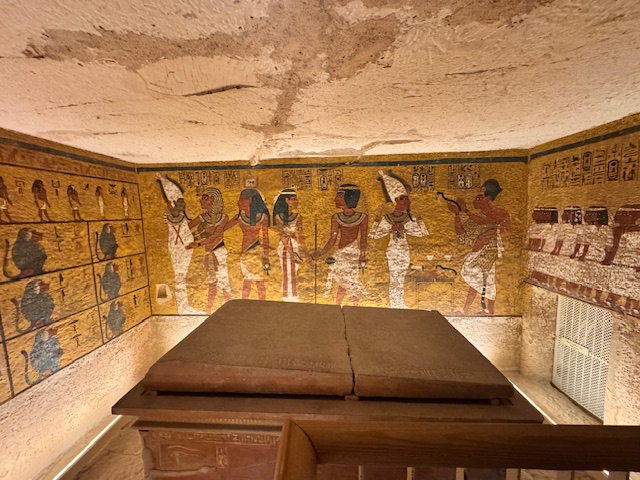
Tutankhamun’s burial chamber was totally not worth it in our opinion. Though you would see his mummified remains in the tomb, the hieroglyphics and artwork are not as impressive as the other two premium tombs. Plus the tomb is small compared to the others.
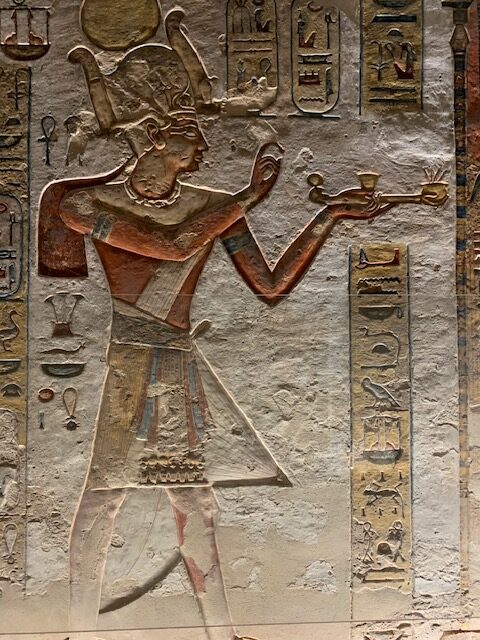
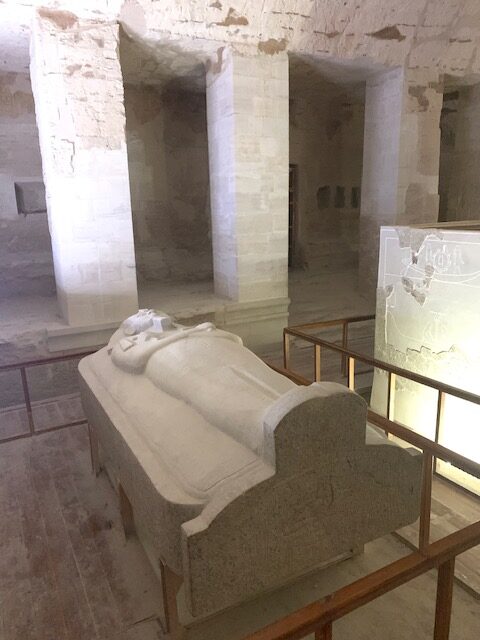
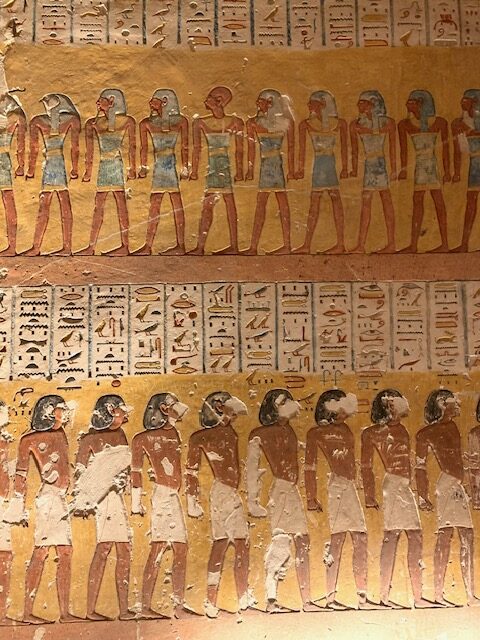
We polled five local guides for their recommendations on which three non-premium temples should we see with our general admission tickets. All said Merenptah (KV8) and Rameses III (KV11) and a toss-up between Rameses IV (KV2) and Rameses IX (KV6). We picked Rameses IV (KV2). Merenptah was not well lit and the hieroglyphics were not as colorful as Rameses III (KV11) and Rameses IV )KV2).
Make sure you hang on to your general admissions ticket as they punch a hole on it every time you visit a non-premium tomb.
Time spent: Four hours.
Hatshepsut Temple
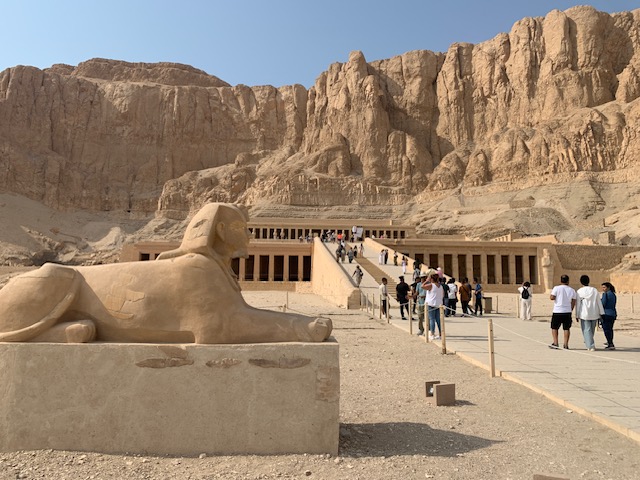
Hatshepsut Temple (Deir el-Bahari) is a terraced funerary temple built into the cliffs with an amphitheater like mountain in the backdrop. The temple is dedicated to Egypt’s powerful female pharaoh, Hatshepsut.
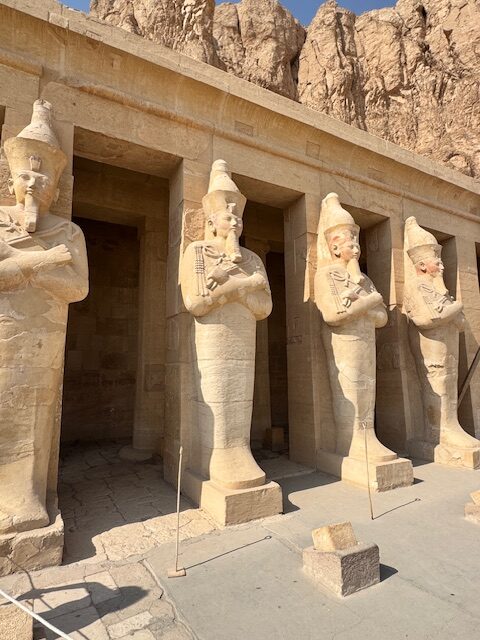
The temple is a three-tiered structure with colonnaded halls and detailed reliefs. There are hieroglyphic markings though not as colorful unlike the tombs at the Valley of the Kings. However, the temple is like no other temples we visited in Luxor.
Time spent: One and a half hours.
Habu Temple
Habu Temple or the Temple of Ramesses III is like a smaller version of Karnak Temple. It has massive columns, though not as impressive as Karnak especially if you had visited the latter beforehand.
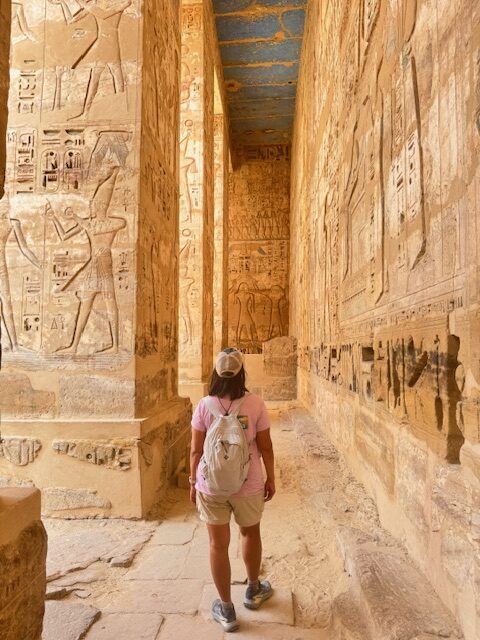
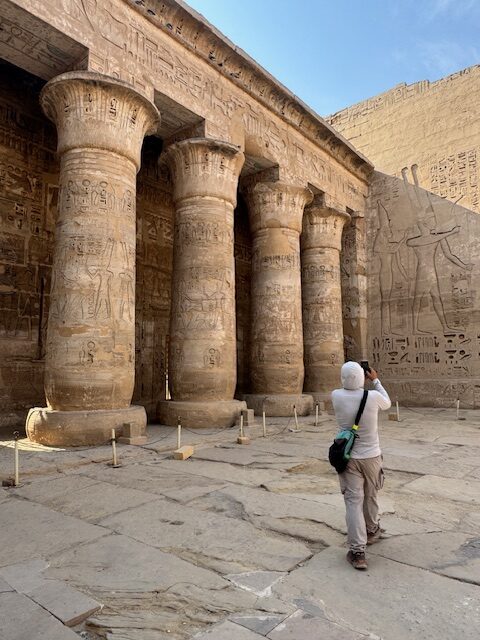
There is probably more to appreciate in Habu Temple than what meets the eye. Perhaps hiring a local guide would provide a more rounded perspective and a deeper sense of appreciation of the temple’s significance from its reliefs and inscriptions.
Time spent: One hour.
Deir El Medina
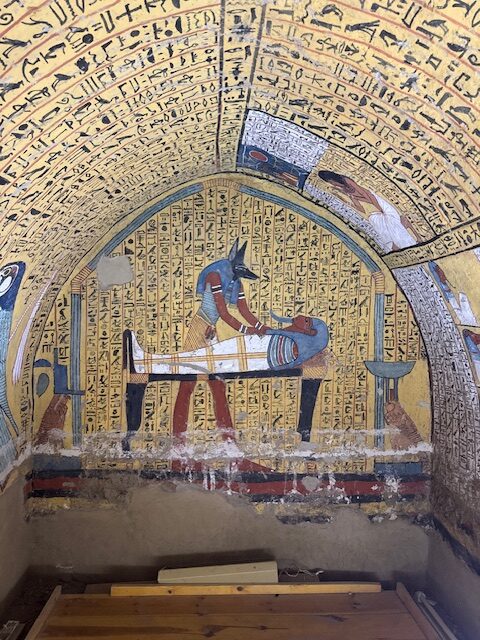
Deir el-Medina is the village of the skilled artisans who constructed the royal tombs in the Valley of the Kings. We went into three tombs. Reaching the burial chambers requires going down narrow staircase passageways with low headroom. The burial chambers were also small but have colorful hieroglyphic inscriptions and paintings.
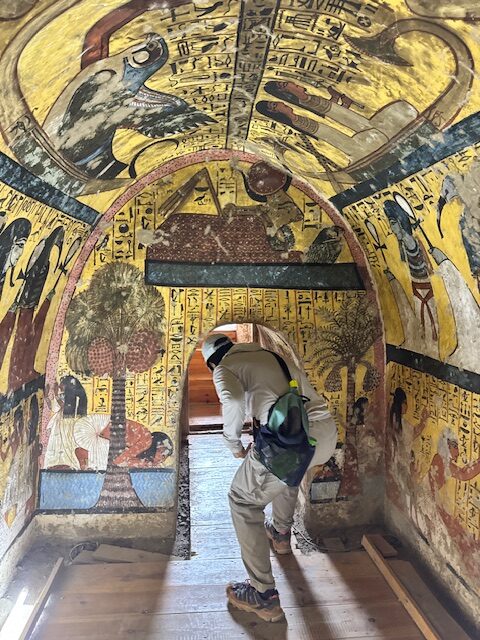
There is also the ruins of an ancient chapel in Deir El Medina. It is about a 10 minute walk from the artisan burial sites. The small chapel has hieroglyphic inscriptions as well. Not worth the walk in our opinion plus there was a local demanding money if you followed his gesture to go up to the chapel’s roof in which there was nothing really to see.
There were very few visitors to Deir El Medina.
Time spent: One and a half hours.
Colossi of Memnon
Colossi of Memnon are two towering statues of Amenhotep III that once stood at the entrance of his vast mortuary temple. Each statue rises about 18 meters high. They are massive to say the least.
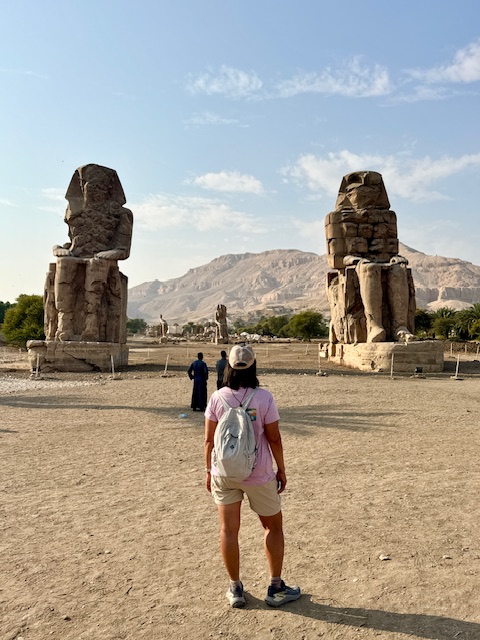
Time spent: Ten Minutes
Tips
Be wary of men wearing traditional Egyptian wardrobes inside the temples and tombs. They will motion to you to look at something behind a fenced area or will volunteer to take your photo. In the end, all they want is money and a minimum ask of 20EGP.
Another thing to be aware of is that the toilets are not free in any of the sites. So bring some cash with you in order to use these facilities.
November through February is the peak season in Luxor. Locals indicate that the summers are very hot. It was warm during our visit such that we stayed in the shade whenever we could.
How To Get There
Luxor has an international airport, code LUX. We flew into Luxor from Cairo. The airport is about a 20 minute drive from Luxor Temple.
Uber does not really work in Luxor. At the airport, we used the Uber app and were met by a taxi driver. The app quoted price was ridiculously low such that we still ended up haggling with the driver as he wanted more than what the rideshare app showed. Might as well haggle with a taxi driver directly in the first place.
We were told that Luxor can also be reached via train and if you are more adventurous, by bus.
Where To Stay
The Nile River cuts through Luxor. The Temple of Karnak and Luxor Temple are on the East Bank while the rest of the sites mentioned here are on the West Bank.
We stayed at Sonesta St. George Hotel which is on the East Bank and about a twenty minute walk to Luxor Temple and restaurants along the banks. The hotel rooms are dated but not cramped. It has three in-house restaurants (buffet, Italian and Japanese).
How To Get Around
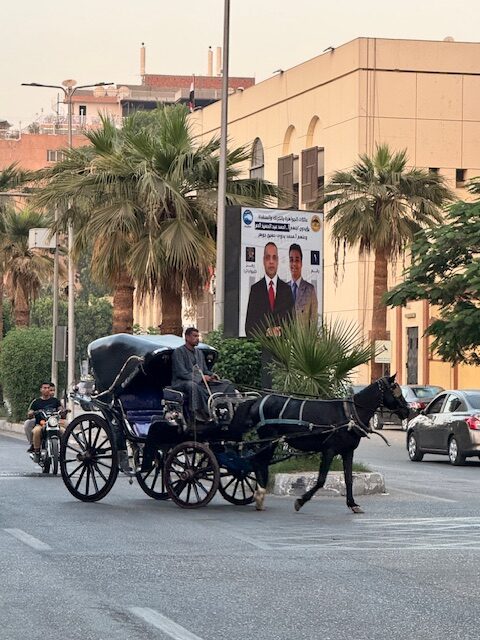
Taxis are the quickest way to get around Luxor. Taxis do not have meters so you have to haggle on the price before agreeing on the ride.
There are also minivans that locals use to get around.
There are also horse drawn carriages for short hauls.
Expected Expenses
Prices are in Egyptian Pounds (EGP) and per person unless noted otherwise.
Archeological Site Admissions (credit cards accepted)
Temple of Karna: 600
Luxor Temple: 500
Valley of Kings: General Admission- 750; Premium Tombs: Ay – 200, Sty – 2,000, Tutankhamun – 700, Rameses V,VI – 220
Hatshepsut Temple – 440
Habu Temple and Deir El Medina (combined) – 440
Colossi of Memnon – free
Others
Taxi from airport to city center – 300
All day taxi to see the West Bank (Valley of Kings, Hatshepsut, etc) – 1,200
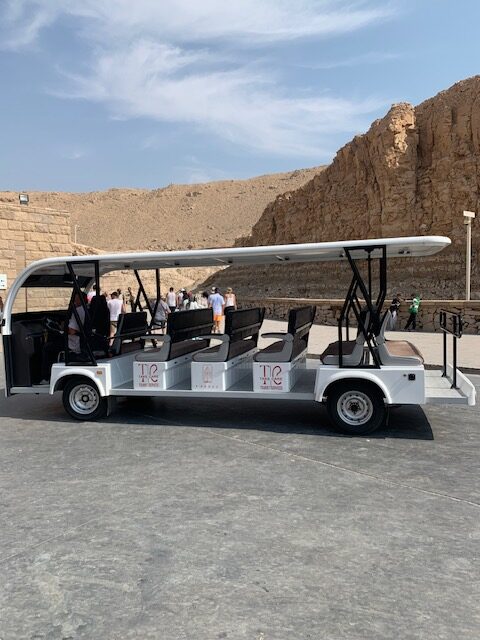
EV shuttle at Valley of Kings and Hatshepsut – 20
Toilet – 20
Stay Informed
If you want to be notified when we post a new travel story, please enter your email below. We respect your privacy. Your email is used only to notify you of new posts and is never sold or shared with third parties. You can unsuscribe at any time.
Summary
Luxor, Egypt, has an unparalleled concentration of ancient Egyptian monuments and archeological sites. It has earned the title of the “world’s greatest open-air museum” with sites like the massive Karnak Temple, Luxor Temple and the elaborate burial sites in the Valley of Kings and Queens.
We were blown away by what we saw in Luxor. Originally, Luxor was not part of our itinerary. But we were glad we made the switch or we would have missed out from such a wonderful experience. We are confident that you would have the same feeling if you include Luxor in your Egypt itinerary.