
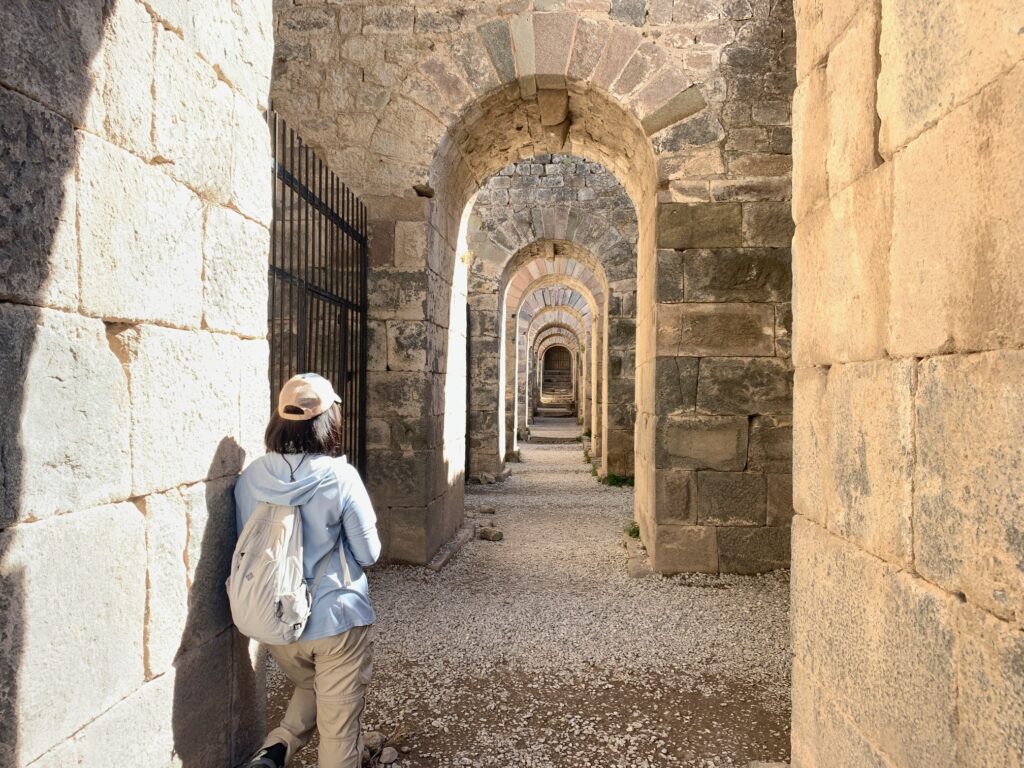
Image: Temple of Trajan arched tunnel in Akropol.
Highlights
– What to see and do in this out of the beaten path and genuine Turkish town of Bergama.
Time of Visit: October 2025
Duration of Visit: Two Nights
Description
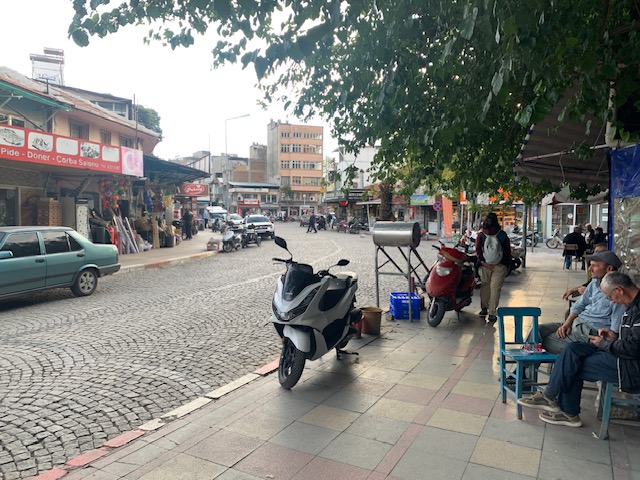
Bergama, located in the Izmir Province of Western Turkey. It is a town steeped in ancient history, tracing its roots back to the powerful Hellenistic kingdom of Pergamon. Once a major cultural and political center, it was famed for its grand acropolis, monumental temples, and one of the largest libraries of the ancient world.
Bergama retains a charming mix of old and new, with winding streets, traditional markets, and stone houses that echo its long and varied past. Nestled among rolling hills, Bergama also enjoys a scenic setting that enhances its rich historical atmosphere.
What makes this town attractive to visit is that it is off the beaten path. Exploring the ruins around town is nice and pleasurable because there are no crowds. We were only able to visit the Pergamon Akropol in Bergama as we were not aware of other sites present in the area. We mention those sites here so that you are aware and can plan on including it in your visit to this charming and quiet town.
Activities
Pergamon Akropol
What To See
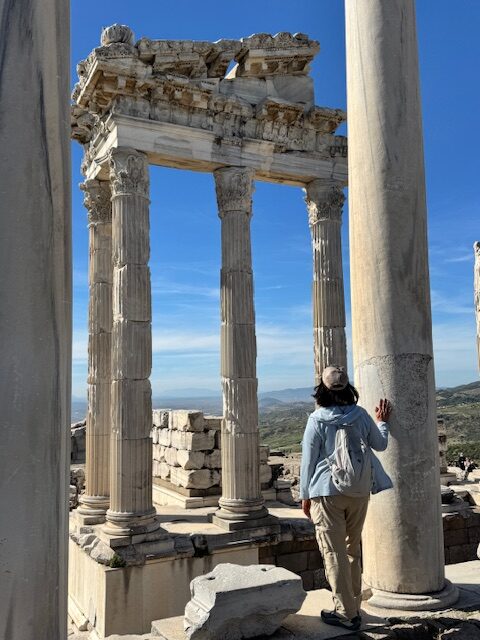
Bergama’s main draw is the archeological site of the Pergamon Akropol or acropolis. The acropolis is located atop a steep hill overlooking the town. It was once the heart of the ancient city of Pergamon—one of the most powerful and sophisticated cities of the Hellenistic world.
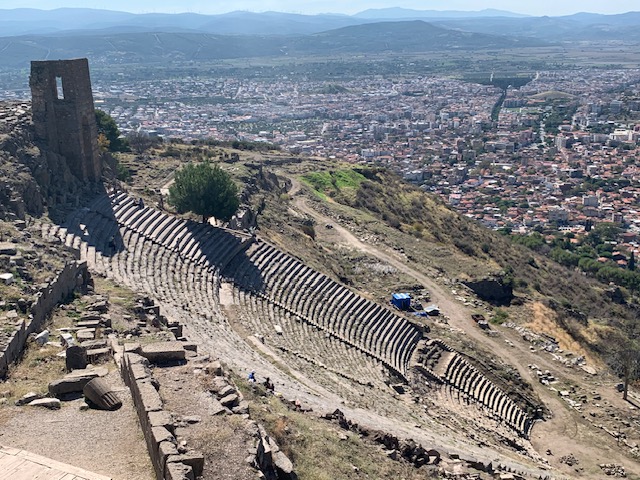
Though most of the structures in the archeological sites have been reduced to rubbles, there are a few that are still partially standing and worth the visit. These are the Temple of Trajan, the long arched passageway of the temple’s substructure and the steeply tiered theater with breathtaking views. All these structures are located on top of the hill.
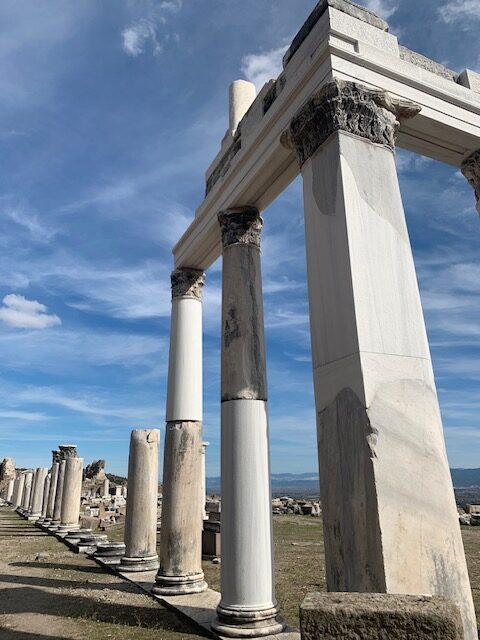
There is also the gymnasium with a few columns still standing. However, the gymnasium is located a couple of hundred feet below the top of the hill. It rarely gets visited.
How To See Akropol
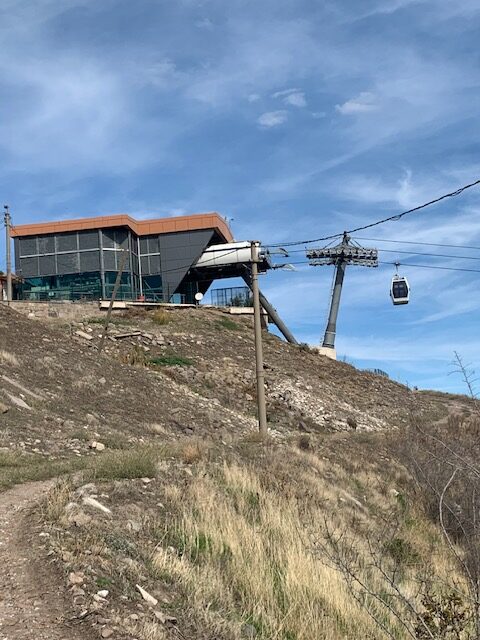
The archeological site’s main gate and ticket office is at the top of the hill. The site extends halfway down the hill with an exit turnstile at the base. Most people only roam around on top of the hill and do not descend to the lower ruins because it would mean a steep climb to return to the starting point.
If you are a history buff, then you may want to take a taxi and get dropped off at the top of the hill. From there, you can work your way down to the exit turnstile and walk back to town. Some people take the cable car from town to the top of the hill. However, reaching the cable car by foot from the center of town still requires a significant walk and climb.
Other Archeological Sites
We did not know of the other archeological sites in Bergama until we got there. These are the Asklepion Archeological Site, Kizilavlu (Basilica) Archeological Site and the Bergama Museum. So if you are interested in seeing these attractions, you should allot more than two nights to stay in Bergama.
Walk The Old Town
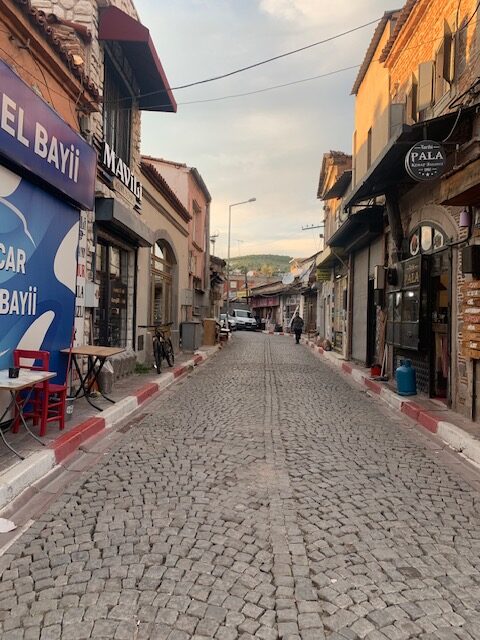
Bergama’s Old Town is not large or glamorous unlike other touristy places in Turkey. Here you will see old folks hanging around coffee shops and restaurants while enjoying each other’s company. There are no tourist stores, only stores that serve the local needs. Hence walking its main street is purely an unadulterated Turkish experience. And the locals are friendly too.

Who knows what you may stumble upon. It was a great surprise for us to run into a store that sells Turkish sweets by the kilogram. Halva, one of Turkey’s traditional sweets, is normally packaged in a small container. At this store, it is stacked in big blocks and cut by the vendor for the weight you want to buy.
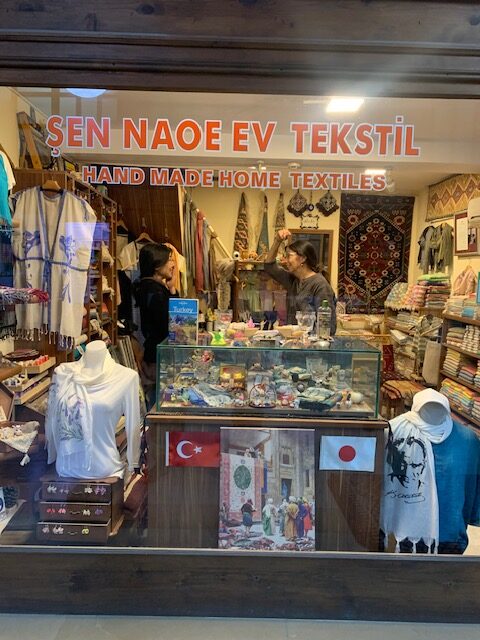
We also came across a store that sells traditional Turkish fabric. The store is owned by a Turkish gentleman and his Japanese wife. The store has been featured in the Lonely Planet guidebook. One of the items that they sell is a versatile fabric called “hammam”. The lightweight fabric weighs just 100 grams, is absorbent, quick drying and soft to the touch. It is normally used as a towel but can also be used as a shawl.
Day Trip to Sardis Archeological Site
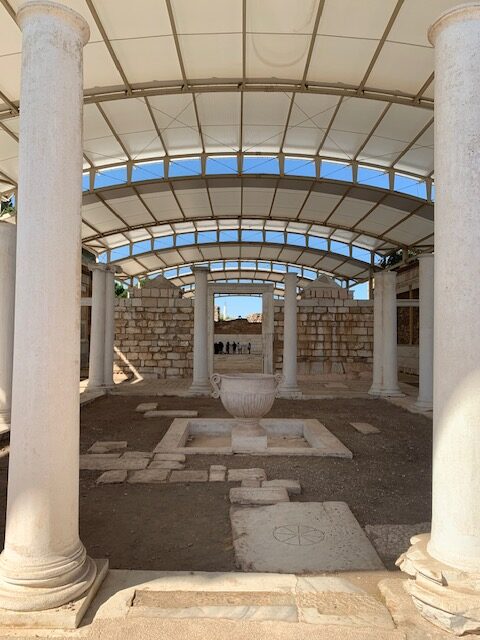
The Sardis Archaeological Site is about a two hour drive from Bergama. Sardis offers visitors a vivid glimpse into the evolution of ancient urban life, art, and religion. The restored marble colonnades and intricately decorated mosaics highlight the city’s wealth and sophistication. Ongoing excavations continue to uncover layers of its long history, from Lydian to Byzantine times, making Sardis not only a key site for understanding ancient Anatolian civilizations but also a peaceful and atmospheric place for travelers interested in the deep cultural roots of Western Turkey.
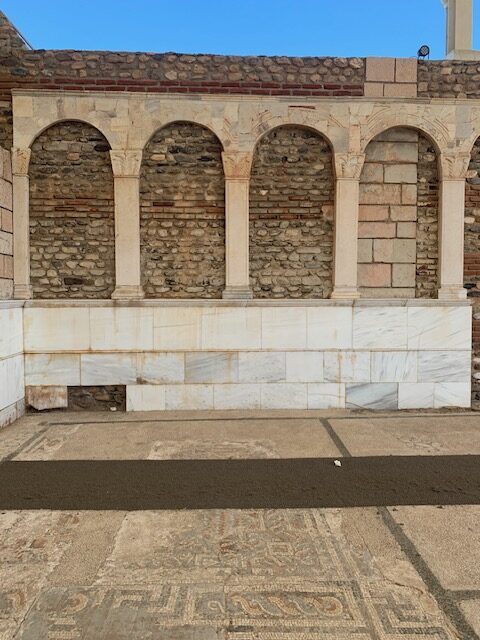
There are two major structures that are worth seeing in the archeological site. These are the Synagogue and the Roman Bath-Gymnasium Complex. The Sardis Synagogue has a roof protection structure, marble columns, mosaic and marble flooring, ornamental fountains and decorative walls. This synagogue dates to the 3rd century CE and was one of the largest in the ancient world, reflecting the prominence and integration of the Jewish community in Roman Sardis.
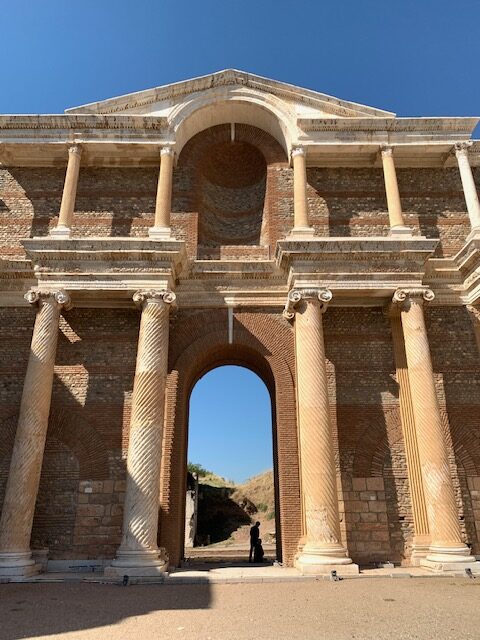
The Roman Bath-Gymnasium Complex, specifically the Marble Court façade of the gymnasium is a two-story colonnaded design and brick-and-stone construction. These are signature features of grand public buildings that combine bathing facilities, exercise areas, and social spaces. Its resemblance to the Library of Celsus in Ephesus is no coincidence — both structures showcase the architectural grandeur of the Roman imperial period.
Roadside Fruitstands
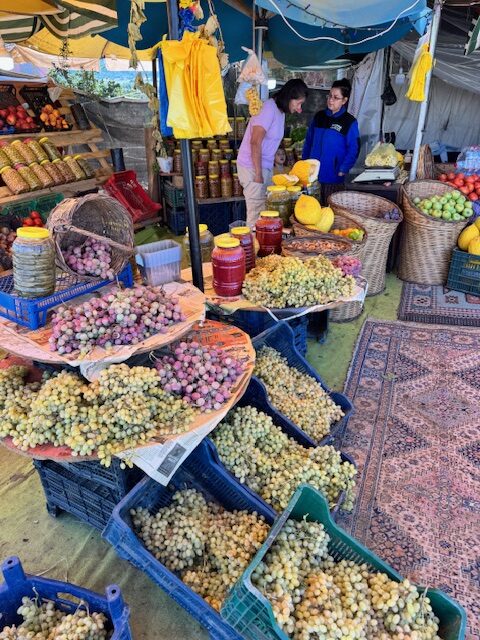
There are acres and acres of grape vineyards between Bergama and Sardis. Along the way you will encounter several roadside fruit stands where you score seedless grapes and watermelons at a very reasonable price. Bring cash for payment.
How To Get There
We drove ourselves from Selçuk to Bergama in our rental car. The drive took about two hours with sections on toll roads.
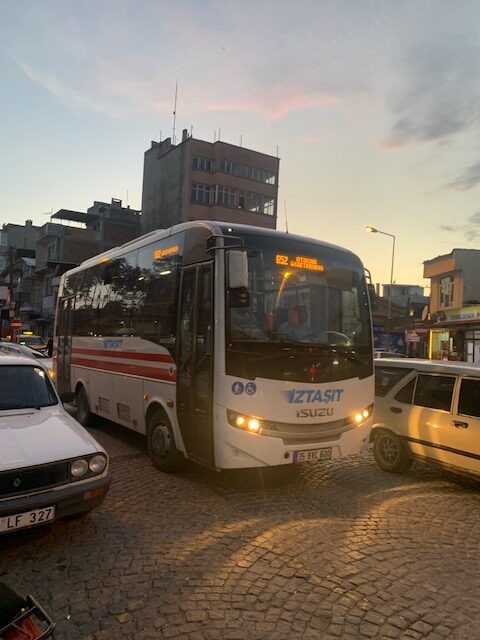
We did see buses in town. The Obilet app is used widely to determine public transportation options in Turkey.
Where To Stay
We stayed at the Atalos Suites Hotel which is walking distance from the old part of town and the Basilica Archeological Site.
How To Get Around
If you do not have your own transportation, there are taxis and buses in town.
Expected Expenses
For archeological sites entry fee costs around Bergama and the region, see photo under Museum Passes. Entry fees are charged in equivalent Turkish lira (TRY).
Pergamon Akropol parking – 100 TRY
Sardis Archeological Site – 3 Euros
Museum Passes

Consider purchasing a Museum Pass if you plan on seeing a number of historical and cultural sites in Turkey. There are several passes to choose from. There is the Turkey Pass which is valid in all the sites in Turkey for 15 days. There are also the Mediterranean, Aegean and Cappadocia Passes which are area dependent.
We did not completely research what we intended to visit and purchased individual site entry fees. In the end, we ended up spending 15 Euros more per person between Ephesus in Selcuk, Akropol in Bergama and Pamukkale instead of purchasing the Aegean Pass. Above is a list of sites where the Aegean Museum Pass is valid (as long as you can do it within seven days).
Summary
As a tourist destination, Bergama captivates visitors with its impressive archaeological sites and deep cultural heritage. The ancient Acropolis of Pergamon, perched dramatically on a hilltop, offers panoramic views and ruins of temples, theaters, and palaces that rival those of Athens. The Asclepion, a renowned ancient medical center dedicated to the god of healing, provides insight into early medical practices. Combined with the town’s welcoming local culture, museums, and authentic Turkish cuisine, Bergama offers travelers a perfect blend of history, exploration, and local flavor, making it a must-visit for anyone interested in the legacy of ancient civilizations.