
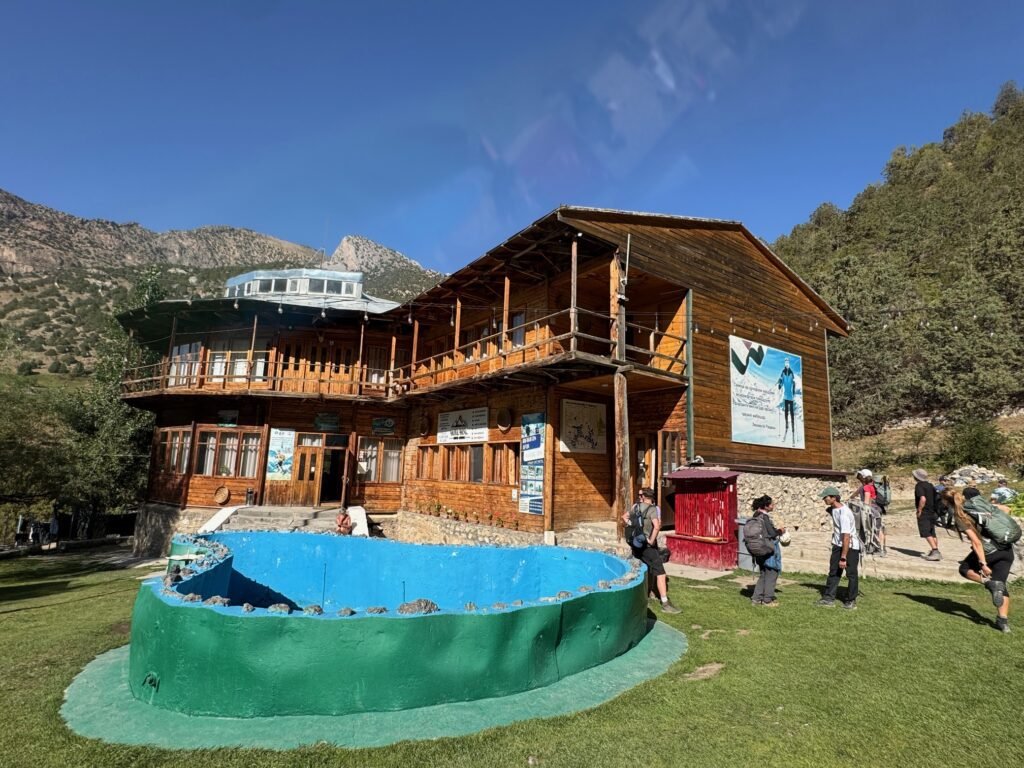
Image: Camp Artuch Main Building in the Fann Mountains of Tajikistan.
Highlights
– Camp Artuch serves as the base for day or multi-day hikes to wonderful alpine sceneries in the Fann Mountains of Tajikistan.
Time of Visit: Early September 2026
Duration of Visit: Three Nights
Description
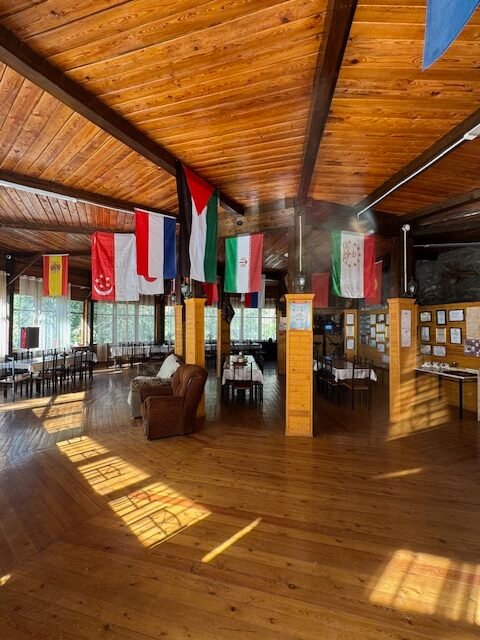
Camp Artuch or Artuch Alplager, is a historic alpine mountaineering hub nestled in the heart of the Fann Mountains in northwestern Tajikistan. Established in 1971 during the Soviet era and fully revitalized for modern international tourism in 2005, the camp rests at a refreshing altitude of 2,200 meters (7,217 feet) above sea level. It is located in a U-shaped valley carved by the Chil Chashma river and completely surrounded by towering peaks and sharp rock massifs.
The camp functions as the base for hiking expeditions while catering to visitor’s lodging necessities. It balances rugged wilderness with essential comforts. The camp has a diverse range of accommodations including private cottages, dormitory rooms, multi-bed block houses for large groups, and grassy areas for pitching tents.
A hearty breakfast is provided for those who stay. Dinner can be purchased separately if desired where traditional Tajik food is served. Though the camp is located deep into the mountains, it does not mean visitors have to rough it out. The beds are comfortable, there are flush toilets and hot showers. Most importantly, WI-Fi is available throughout the camp and there is even a bar.
Activities
We only did day hikes from Artuch Camp. Other hikers use it as a starting point to do multi-day hikes to secluded destinations such as Alaudin Pass or Buzurg Alo Lake. Listed below are the two day hikes we did.
Kulikalon Lakes Area
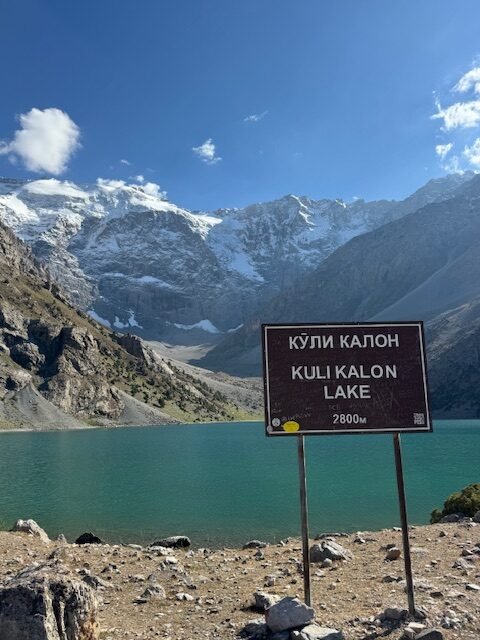
We hiked to Kulikalon Lakes Area on our first day and it is a must do. The area is dominated by Kulikalon Lake (Tajik for “Big Lake”) and six other smaller lakes. Kulikalon Lake is the second-largest body of water in the Fann Mountains of southwestern Sughd Province, Tajikistan.
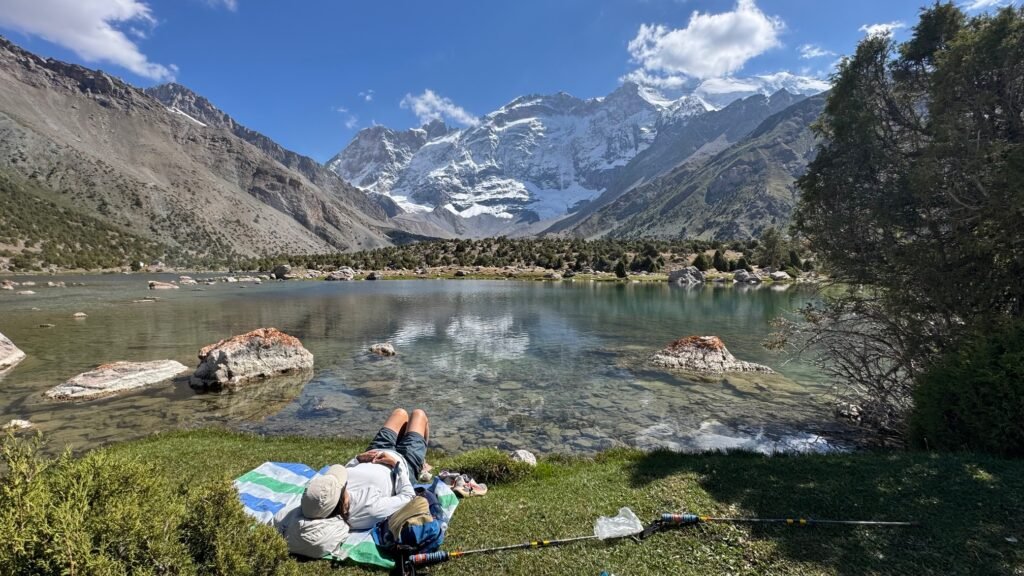
The lakes are nestled within the massive Kulikalon glacial depression at an elevation of 2,800 meters (9,200 feet) above sea level. The lakes’ crystal-clear waters dynamically shift color from emerald green to brilliant turquoise to deep blue depending on the sunlight. The lakes are interconnected and are fed by meltwater streams flowing from the surrounding towering glaciers, such as the Chimtarga massif.
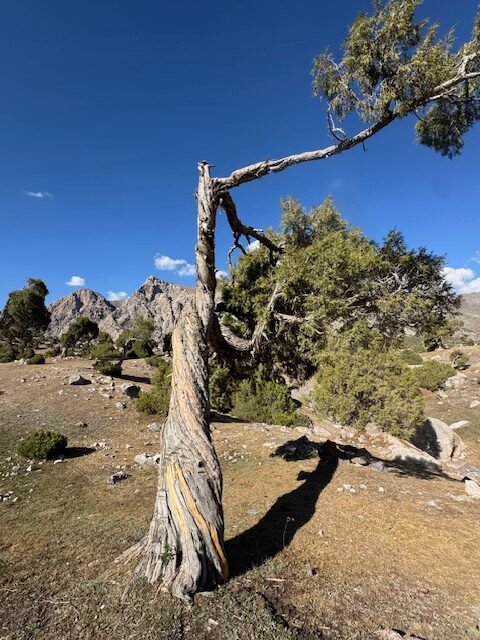
The Kulikalon Lakes Area serves as a premier destination for high-altitude trekking. Ancient Zeravshan junipers are found here. Some trees have interestingly twisted trunks. The area features a surprisingly mild summer climate, making the lakes’ waters warm enough for swimming.
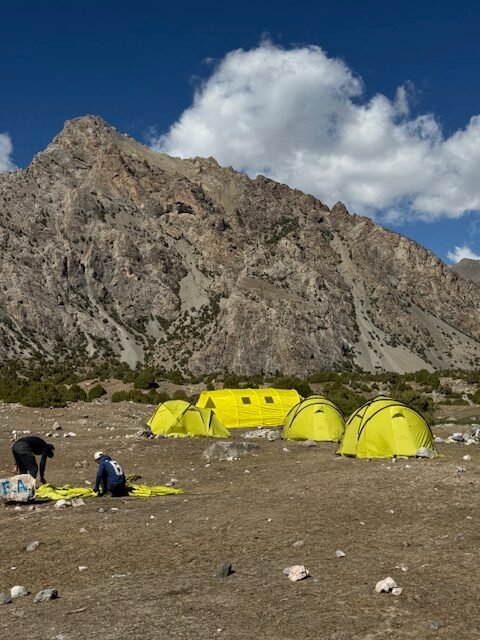
There are tent campsites scattered throughout the lake area. There is also a store at the northern end of Bibijonat Lake that caters to hikers and campers and also serve meals. This makes it a convenient stop for those wanting to do day explorations or continue on a multi-day trek such as to Alaudin Pass and Alaudin Lake.
To reach the Kulikalon Lakes area from Camp Artuch, simply walk uphill on the only road in the valley. The road goes alongside the river for a couple of kilometers before turning into a trail and the challenging uphill climb. The roundtrip hike around the lakes takes around 14.5 km (9 mi) with an elevation gain of around 780 m (2,550 ft).
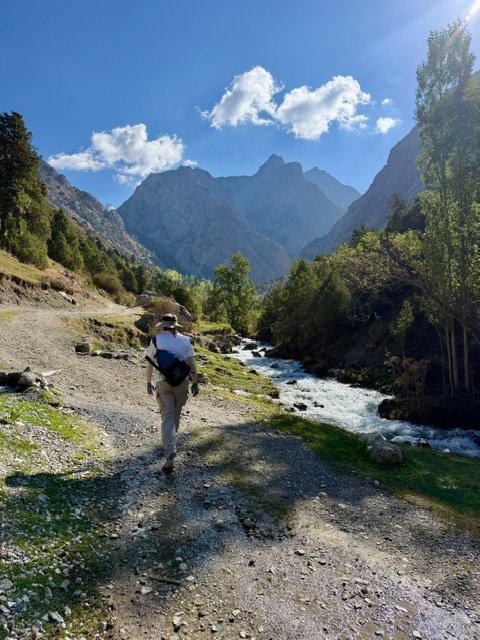
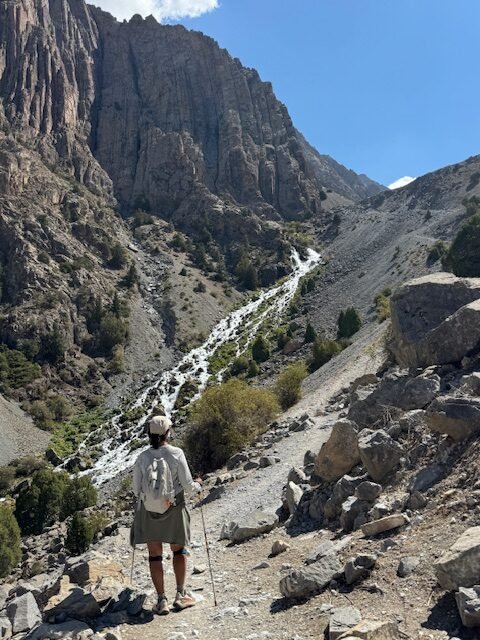
Our only regret is that we did not start off early during our hike to the Kulikalon Lakes Area. We would very much like to have spent more time admiring the different bodies of water in this glacial basin connected by cascading streams. And the rain that occurred the day before capped the towering mountains with snow which made it more beautiful as it contrasted nicely with the blue sky.
Chukurak Pass
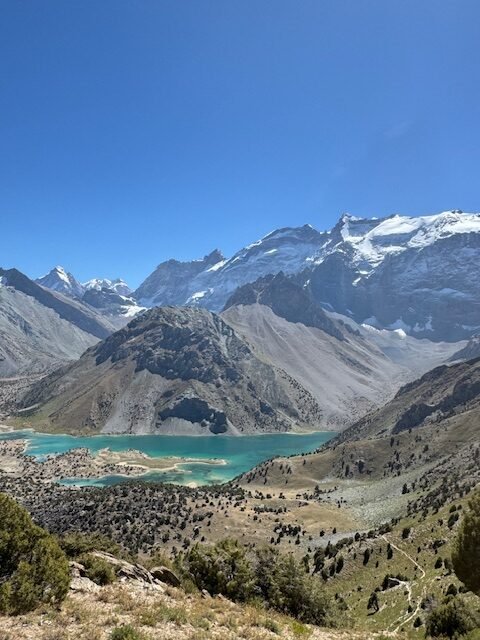
Chukurak Pass is a high-altitude mountain saddle situated at an elevation of 3,180 meters (10,433 feet) above sea level. It serves as a vital geographic connector and a popular trekking route linking the Chukurak Gorge directly with the Kulikalon Lakes Area. The approach to the pass is physically demanding but highly rewarding with spectacular, sweeping views of the lakes shimmering below and the towering peaks that surround the lakes area.
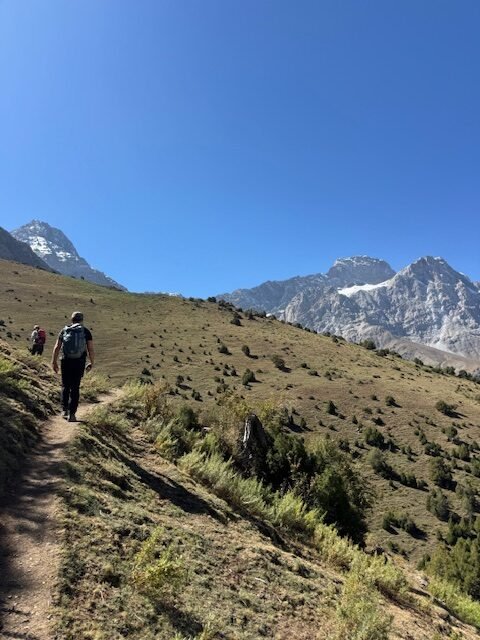
The trail leading up to the pass begins from Camp Artuch and steeply climbs to Chukurak Lake. The trail goes past Chukurak Lake and turns left towards the juniper forest while steadily climbing in elevation. Once out of the forest, the scenery opens giving way to sweeping views of the impending uphill slog to the pass.
The trail may be difficult to follow as it is intertwined with livestock paths. Using an offline map is crucial as well as being attentive to look for cairns which are few. Some even hire guides to prevent going down the wrong path as each step can be demanding because of the steepness and the altitude. But the destination is well worth the effort and is very rewarding.
Tip
You may be tempted to hike to Ziyorat Lake after completing the hike to Chukurak Lake. Please double check with the camp staff if the lake still has water. Though the lake is in a cirque, the lake was bone dry when I hiked to it.
How To Get There
There are basically two options to reach Camp Artuch from the nearest city, Panjakent. First is to take a marshrutka from Panjakent to Artuch Village. From Artuch Village, it is about a 8 km (5 mi) uphill walk on unpaved road to the camp.
The second way is to hire a private car from Panjakent to the camp. The camp quoted us a very high private transfer from Panjakent. Luckily our Hotel Sugd host in Panjakent knew a lot of people. Mr. Maksud (our host) arranged a marshrutska transportation from the town to Camp Artuch. The marshrutska driver picked us up from the hotel around 8:00AM.
There are two daily marshrutska departures between Panjakent and Artuch Village. From Panjakent, it is 8AM and 12PM while it is 9AM and 1PM from Artuch Village school. The travel time takes about an hour. The marshrutska passes by the Panjakent Bazaar where it normally picks up passengers. There was no route number or bus number on the windshield of the marshrutska.
Where To Stay
You have to stay in Camp Artuch to access this area of the Fann Mountains. Staying at Artuch Village would not be an option if you plan on doing any hiking. You can contact Camp Artuch directly through their WhatsApp # +992 92 888 6888.
How To Get Around
There are no taxi services in Camp Artuch unless one happens to be there, which is how we got back to Panjakent from the camp.
Expected Expenses
Camp Artuch Lodging – depends on the type of accommodation. Contact the camp directly for prices. Breakfast is included with the stay.
Camp Artuch Dinner – there are no other restaurants in the area so your only option for dinner is at the camp unless you bring your own food. Dinner was $15/pax or equivalent in Tajik som.
Panjakent to Camp Artuch by marshrutka – 360 TJS (for two people)
Camp Artuch to Panjakent by private driver – 500 TJS (for the car)
Stay Informed
If you want to be notified when we post a new travel story, please enter your email below. We respect your privacy. Your email is used only to notify you of new posts and is never sold or shared with third parties. You can unsubscribe at any time.
Summary
Camp Artuch stands out as a popular stop on any outdoorsy itinerary because it serves as the logistical gateway to the beautiful Kulikalon Lakes Area of the Fann Mountains and high mountain passes such as Chukurak Pass. It also serves as a starting point for multiday treks to Alaudin Pass and lake and other remote lakes such as Buzurg Alo Lake.
The camp has a variety of accommodation ranging from dormitory style rooms with multiple beds to private cottages with private bathrooms. Modern sit down toilets, hot showers and WiFi are also available which makes staying in the mountains comfortable and does not mean roughing it out. There are also homesteads near the camp which provides an opportunity to interact with friendly and hospitable to experience genuine Tajik culture.
We were apprehensive about including Camp Artuch in our Tajikistan itinerary. We almost doubted our decision when we arrived on a cold, overcast and cloudy day. But our worries disappeared when the sun and the clear blue sky returned the following day. It revealed majestic mountains that rivaled other beautiful places in all our travels.
We consider our time in Camp Artuch and the Fann Mountains as one of our highlight experiences in Tajikistan.