

Image: Ad Deir (Monastery) in Petra Archeological Park, Jordan.
Highlights
– Your ultimate guide on how to visit Petra, Jordan.
Time of Visit: October 2025
Duration of Visit: Three Nights
Description
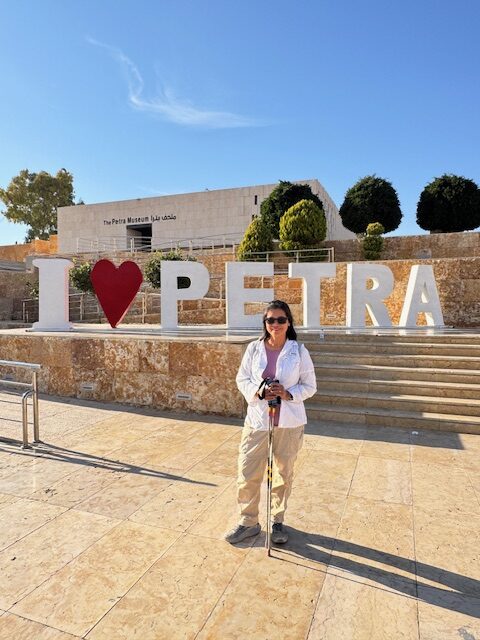
Petra (hereinafter referred to as the Park) is a UNESCO World Heritage Site and is more than two thousand years old. It was built by ancient Arabs called Nabateans in the Shara Mountains. They were originally nomadic traders who grew wealthy by controlling key trade routes for spices, incense, and other goods. They played a vital part of the major trading route connecting ancient Mesopotamia and Egypt that resulted in Petra flourishing,
In its heyday, Petra had impressive architecture and structures. Today, most of the structures are no longer standing but the intricate facades sculpted into sandstone cliffs along with other monuments are well-preserved.
Petra was made even more famous by the movie Indiana Jones and the Last Crusade (1989) where one of the scenes was filmed with the famous Treasury in the background.
Activities
Overview
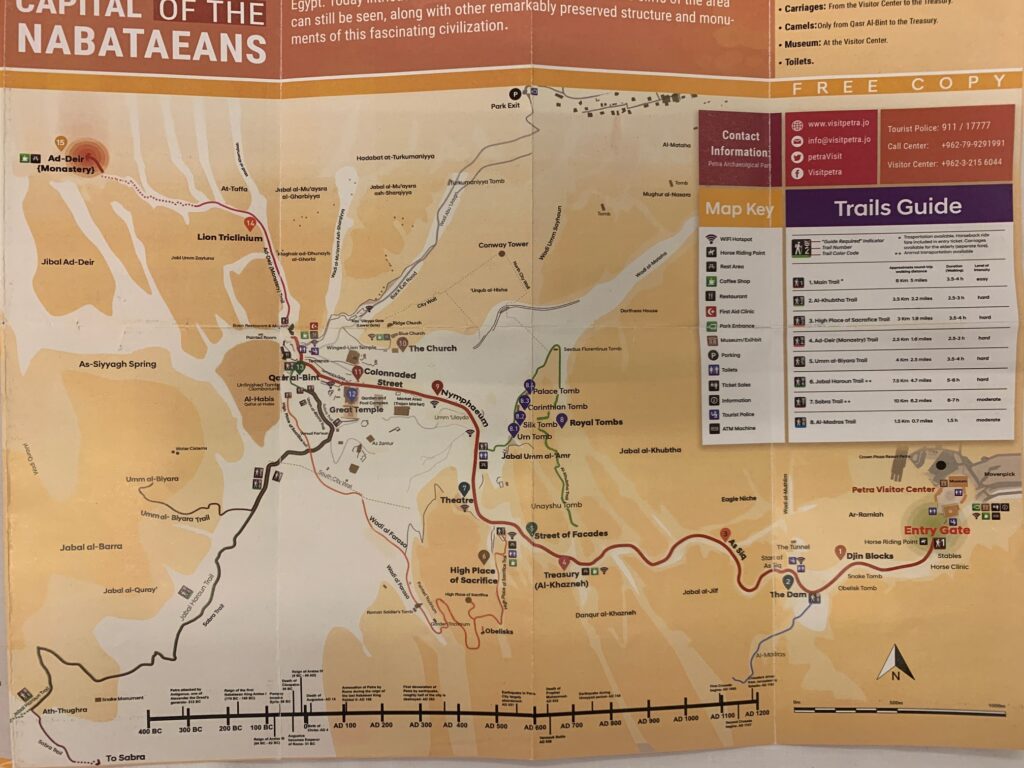
Petra is a large archeological site. There are 15 points of interest shown on the park map. All but one are free to explore. Most of the sites, including the famous Treasury, are accessible from the Main Trail which starts from the Petra Visitor Center Entry Gate. The Main Trail is about four kilometers long, according to the park map, and ends at the temple ruins called Qasr al-Bint (No. 13).
There are several side trails that can be taken from the Main Trail which leads to sites like the High Place of Sacrifice (No. 6), Royal Tombs (No. 8), The Church (No. 10), Lion Trilinium (No. 14) and Ad-Deir (Monastery – No. 15). Some of these sites require tackling a lot of steps while others are not so bad (these will be described later).
The Main Trail is wide and on a slight downhill slope until it gets to the Treasury. From the Treasury, the trail is fairly even until it reaches Qasr al-Bint.
The sites are listed and described according to their order along the Main Trail, beginning from the Petra Visitor Center Entry Gate. We also provide a few tips on how to explore the archeological site to minimize walking as well as our opinion on how many days would be needed to explore the archeological site.
Sites
No.1 Djinn Blocks
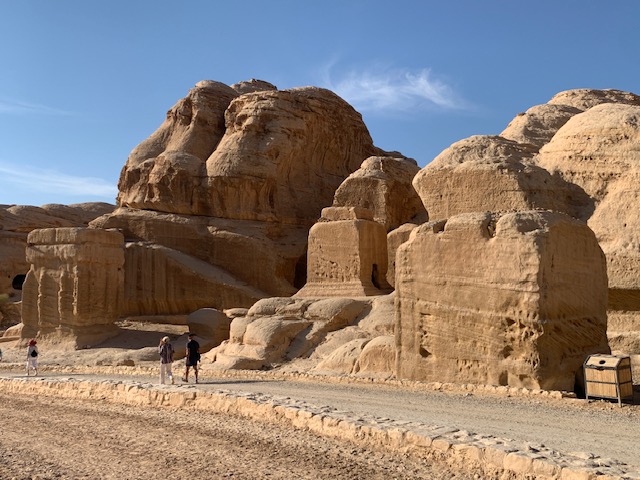
About 15 minutes from the entry gate are three massive Djinn Blocks on the right side of the Main Trail. More than likely you will not notice them as your eyes would be fixated on the Obelisk Tomb which is across and further down the trail.
No. 2 The Dam
The Dam diverted flash floods away from The Siq (narrow gorge). I was told that a guide is required to tackle the Al-Madras Trail which leads to the dam.
No. 3 The Siq
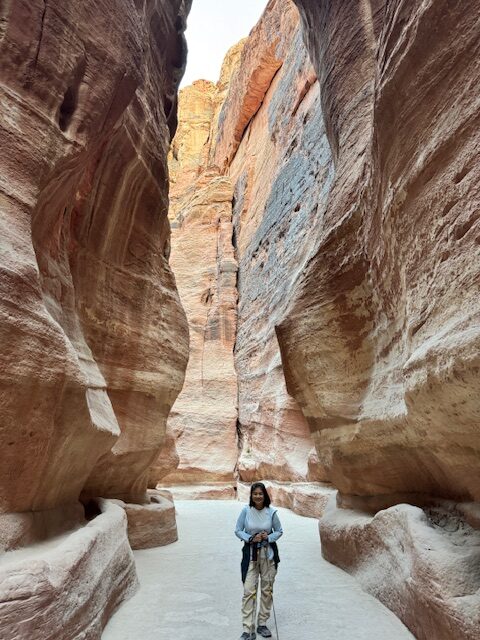
This is the narrow gorge that is about 1.2 kilometers long with vertical walls over a hundred feet high. This section of the Main Trail is paved with some cobbled sections. This Siq provides some tremendous photo opportunities.
No. 4 The Treasury (Al Khazneh)
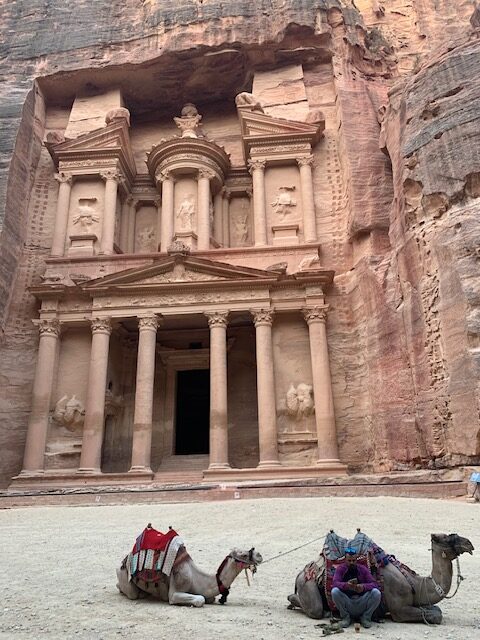
The face of Petra is the Treasury and is its most magnificent facade. It is probably the most photographed site in the Park. It is almost 40 meters high and intricately decorated. Pay attention to its sides as you can see the hand holes where workers used to climb to carve out the facade.
No. 5 The Street of Facades
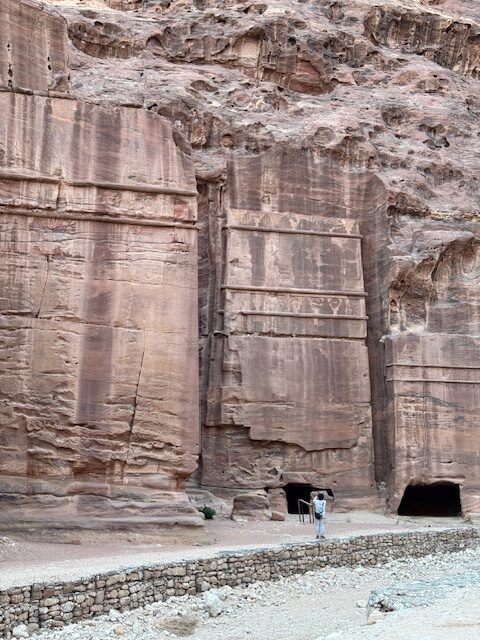
This is the name given to the row of monumental Nabatean tombs carved in the Southern cliff face.
No. 6 High Place of Sacrifice
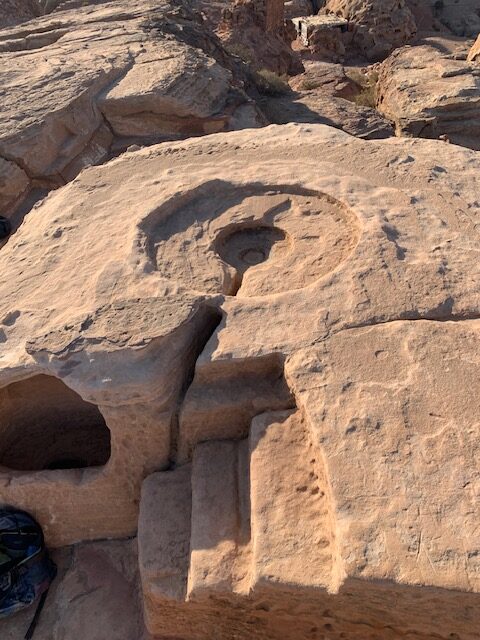
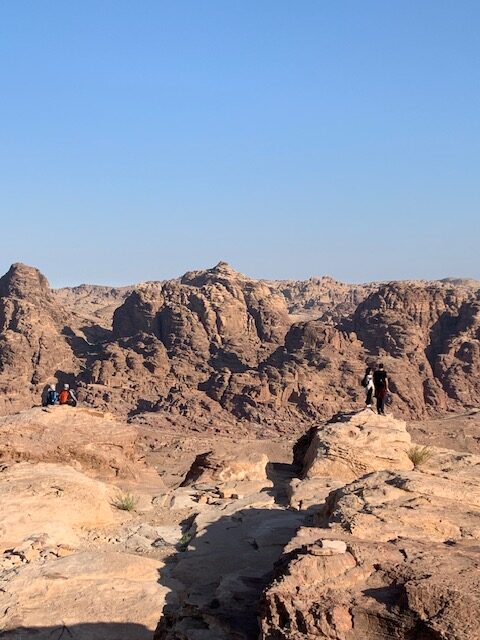
This was a place of worship that is located on a mountain plateau. You’ll be climbing a lot of steps to reach the carved stone surface which is about 10 feet in diameter. The High Place of Sacrifice may not be much to look at but the views at the mountaintop are breathtaking.
No.7 The Theatre
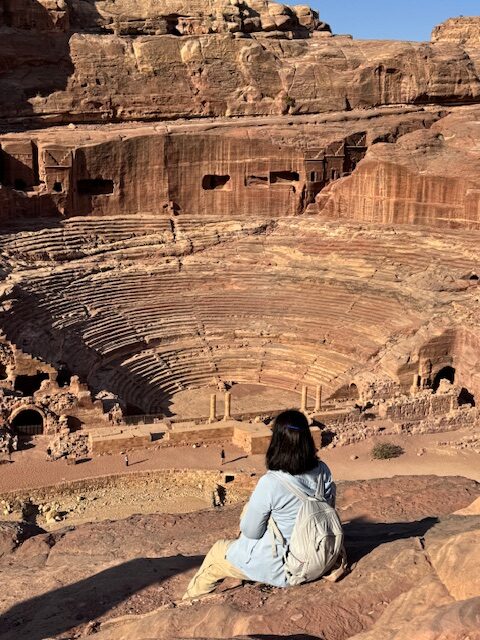
This Roman Theater is the only one in the world that is carved into the rock.
No. 8 The Royal Tombs
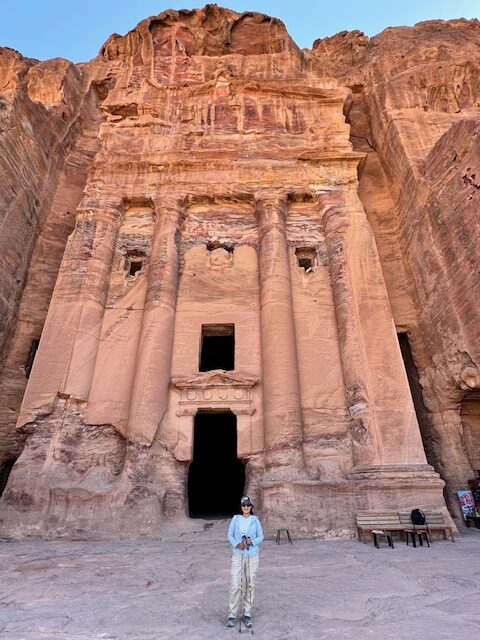
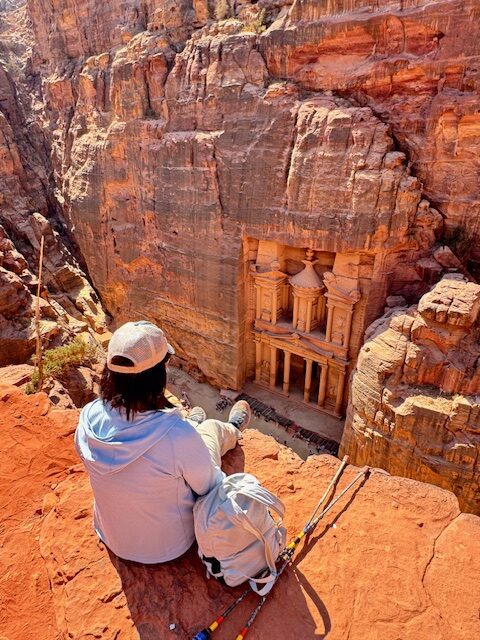
The Royal Tombs are four magnificent facades carved into the rock. The tombs are Urn, Silk, Corinthian and Palace. These tombs can be reached by following the Al-Khubtha Trail. The trail also leads to the Panoramic View of the Treasury and the Theater.
No. 9 The Nymphaeum
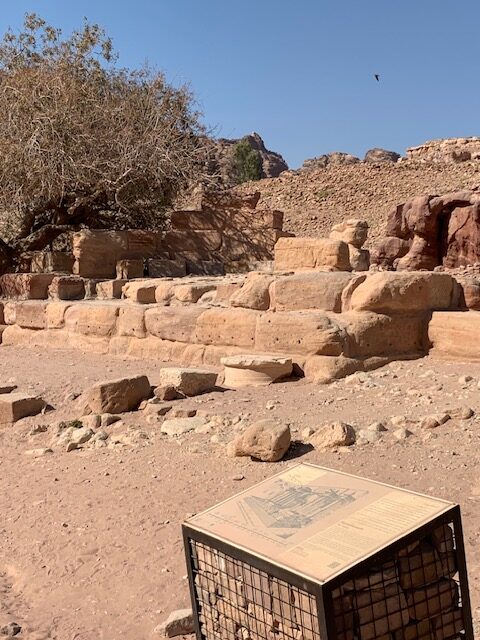
The Nymphaeum was a public fountain and semi-circular in shape. Now, it is just a pile of rocks with no semblance of its glory days.
No. 10 The Church
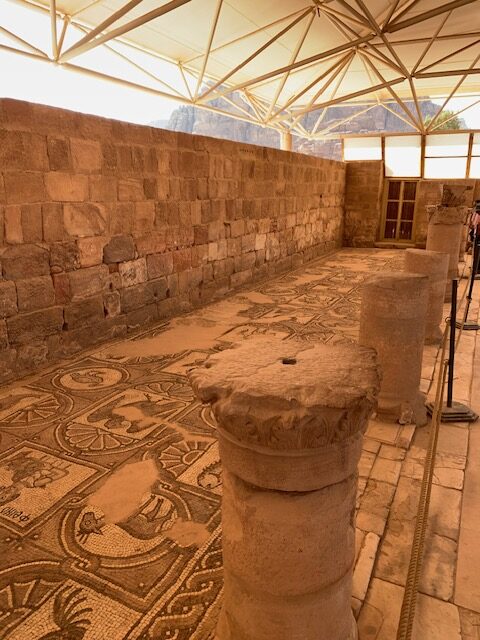
Only the church’s floor mosaic remains and is protected by an overhead canopy. The Church is located away from the main trail and requires a little bit of climbing as it is on top of a hill.
No. 11 The Colonnaded Street
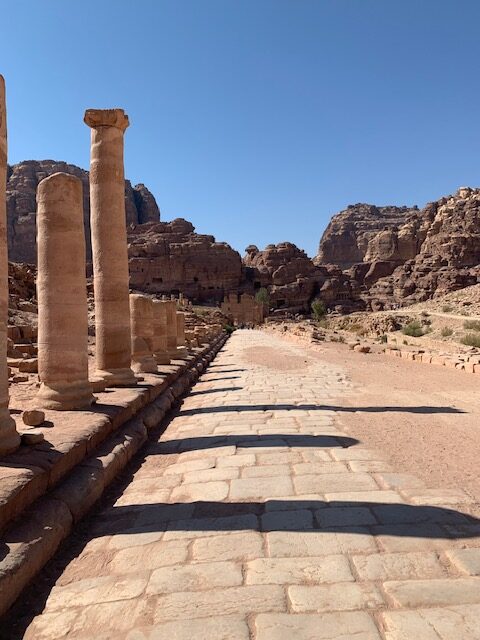
The Colonnaded Street is part of the Main Trail. Some of the columns are still standing. Walking along this street is like stepping back in time.
No. 12 Great Temple
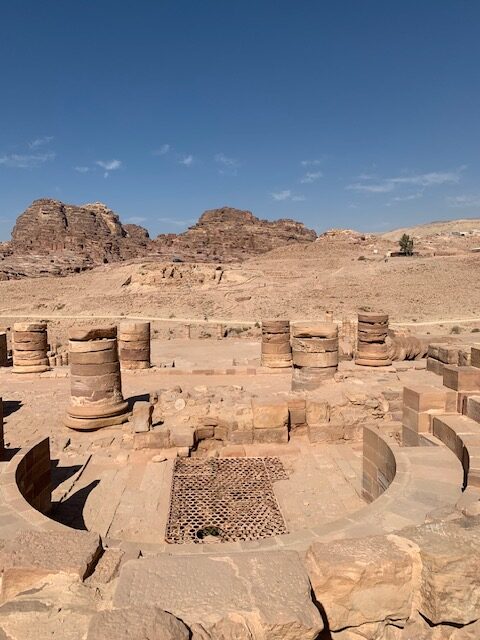
This temple is massive (about 7,560 sq. meter) but is hard to appreciate because so much of its structure is no longer standing. What remains are some of the columns and the stone floor along with a few small arches and a theatron.
No. 13 Qasr al-Bint
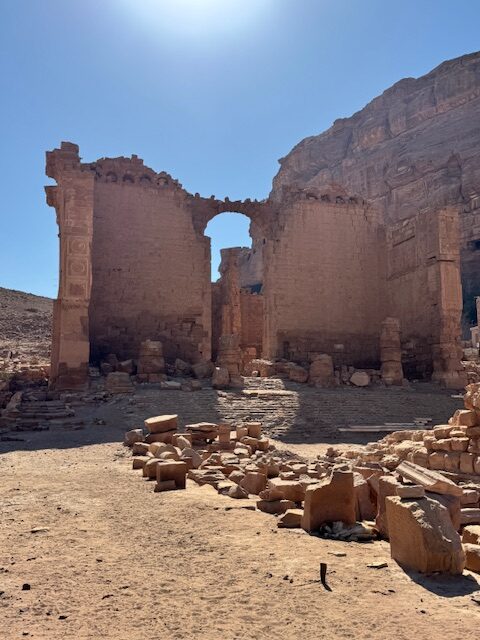
This almost square monument is massive with walls as high as 23 m (75 ft). The monument is fenced off and cannot be accessed.
Monastery Trail (from Qasr al-Bint)
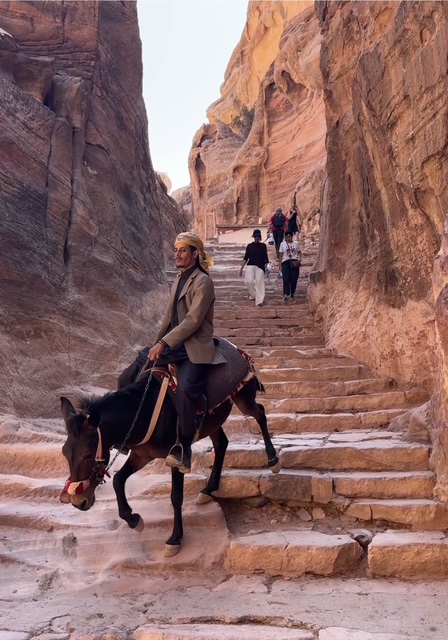
The Monastery Trail begins where the Main Trail ends, which is at Qasr al-Bint. The Monastery Trail ends at Ad Deir. The Lion Triclinium can also be accessed from the Monastery Trail.
The trail starts at a gradual uphill slope up to the Lion Triclinium then becomes a series of stair steps and steep slopes all the way to Ad Deir. It takes about 45 minutes to an hour to reach Ad Deir. Be prepared to say “no” several times to locals offering a donkey ride on the Monastery Trail.
No. 14 The Lion Triclinium
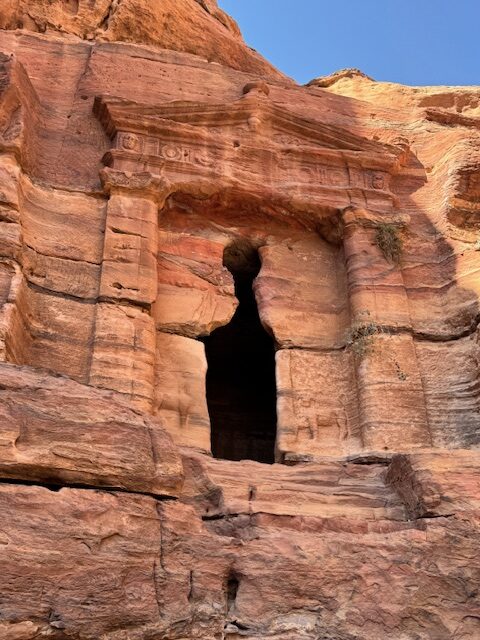
A Triclinium is a dining table with couches along three sides which was common in ancient Rome. This monument was so named because of the lions that were carved on both sides of the entry opening. The lions’ heads are gone but the rest is still recognizable. It is a short five minute side trip from the Monastery Trail.
No. 15 Ad Deir (Monastery)
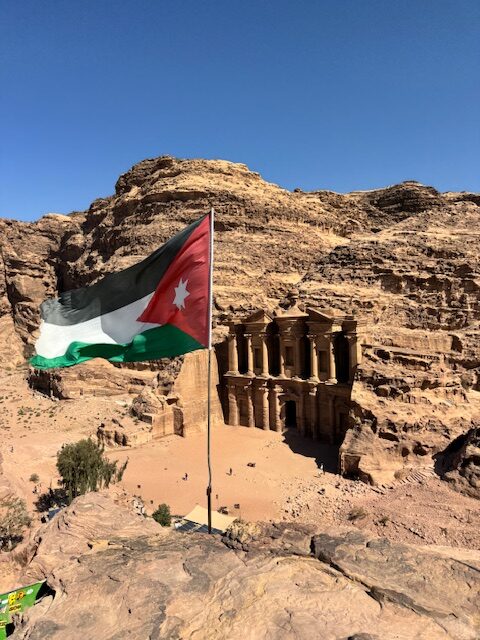
The Monastery is one of the largest monuments in Petra at 43 m (154 ft) wide and 48.3 m (158 ft) high. It is twice as wide as the Treasury and about 8 m (26 ft) taller. Locals advised us that it best to take a Monastery photo as close to the ground as possible with the camera phone turned down side up so that the lens is at the lowest possible position.
Petra By Night
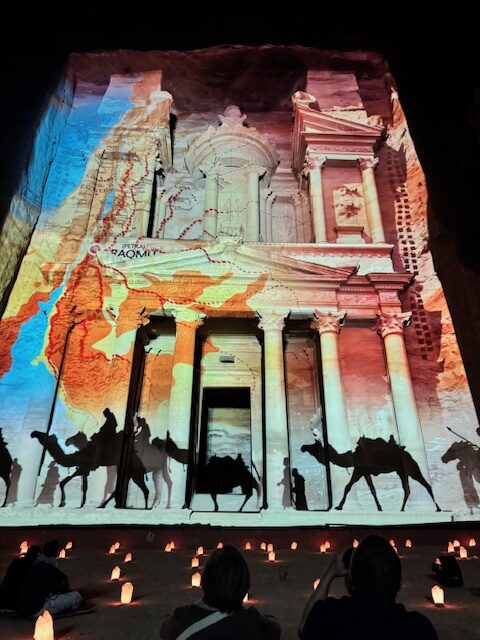
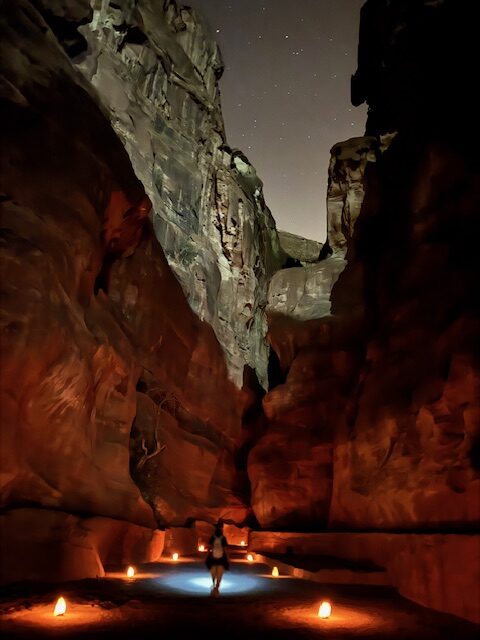
In our opinion, Petra By Night is pricey but worth it. It is basically a light show that tells the story about Petra. Lights are projected on the Treasury to create the illusion that you are being taken back in time. The light show lasts about 30 minutes. The lights stay on for another 15 minutes so that people can take photos after the show.
Tickets are sold at the Visitor Center, just look for the sign “Petra By Night Tickets” with a direction arrow. Entry began at 8:30 PM but people fall in line around 8 PM at the gate.
The path is lit by candles in paper bags so it’s dark. Having a headlight or flashlight helps instead of using the flashlight from your cell phone, especially at the trail’s cobbled sections. Having a long exposure camera also helps capture the evening scenery beautifully.
Mats are laid out in front of the Treasury for people to sit. There are also some folding stools placed at the back for those who prefer not to sit on the ground. We were on one of the mats and spread our picnic blanket over it so we could lie down. It turns out lying down is a much better viewing position than sitting because you do not have to tilt your head to look up.
Petra By The Back Door
Shuttle
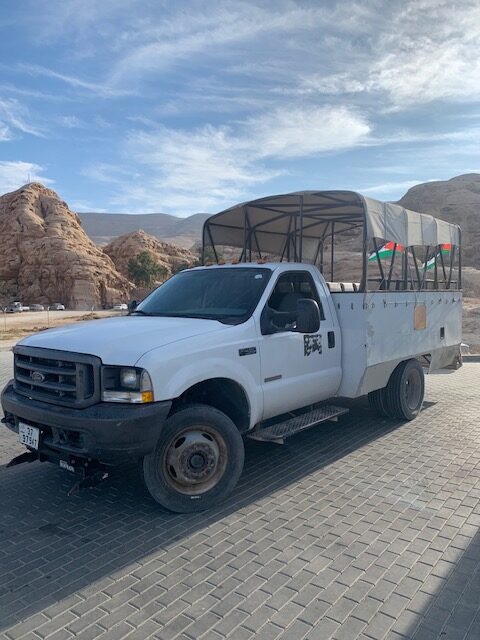
Petra By The Back Door is a must. This route is not shown on the Park map but people at the Visitor Center Information Desk will tell you about it if you ask.
The adventure requires two shuttle rides and about an hour to hour and half of hiking. The first shuttle ride is from the parking area behind the Petra Museum to the Cultural Village (7AM to 2 PM, supposedly every 30 minutes). This shuttle is included in the park entry tickets which the driver checks before people are allowed to board. The first shuttle ride takes about twenty minutes to the Cultural Village.
The second shuttle starts at the Cultural Village and goes on a dirt road to the other end of the Monastery Trail (trailhead). Along the way, the second shuttle passes by Little Petra before it goes on the dirt road. The second shuttle takes about an hour on a 4×4 pickup truck that seats about 20 people, maybe more. Tickets for the 4×4 shuttle are sold at the Park office in Cultural Village.
Monastery Trail (from the trailhead)
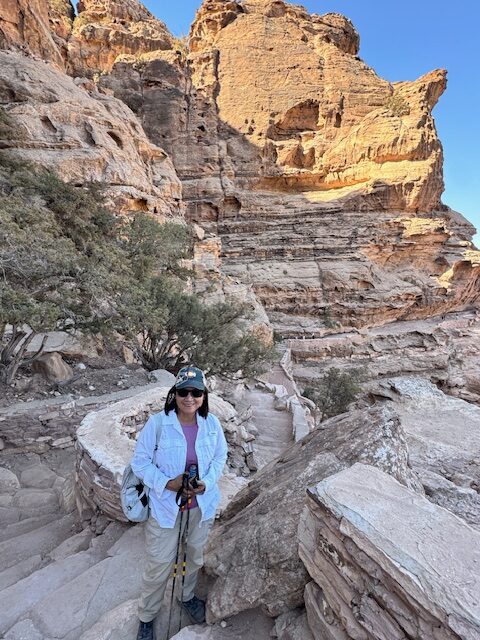
We were dropped off at the trailhead which is the start of the Monastery Trail that ends at Qasr al-Bint. Hiking from this trail head is called Petra By The Back Door. This section of the Monastery Trail has its share of stair steps and up and down sections but is considered to have less elevation gain than the Ad Deir (Monastery) compared to starting at Qasr al-Bint.
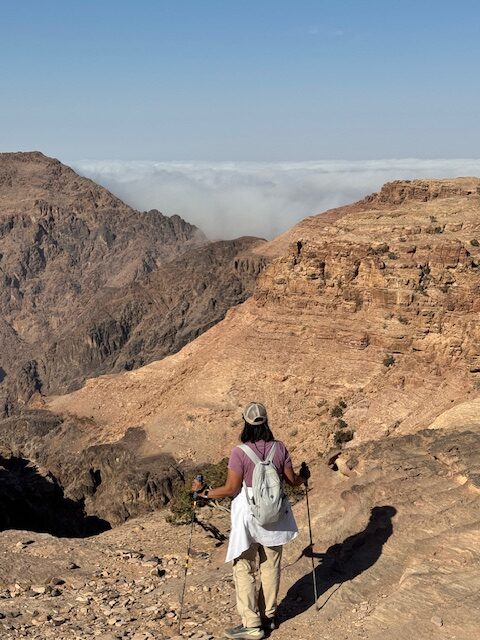
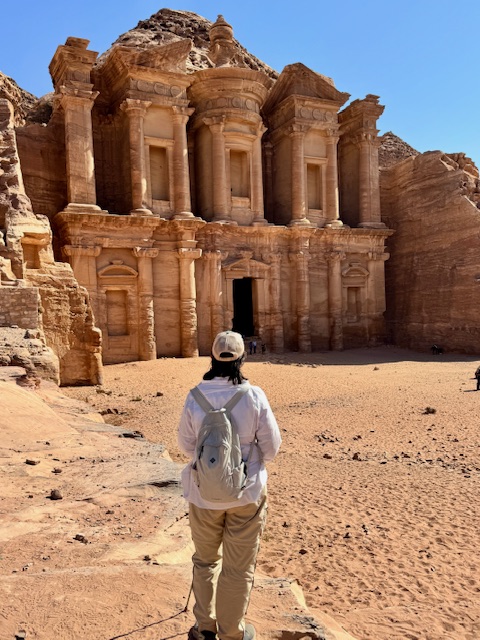
It took us about 1:20 to reach the Monastery and that included plenty of stops for picture taking. The trail passes by a deep canyon that reminded me of the Grand Canyon in Arizona. The trail is also shaded most of the time during our hike when we started at the trailhead around 8:30 AM.
Little Petra
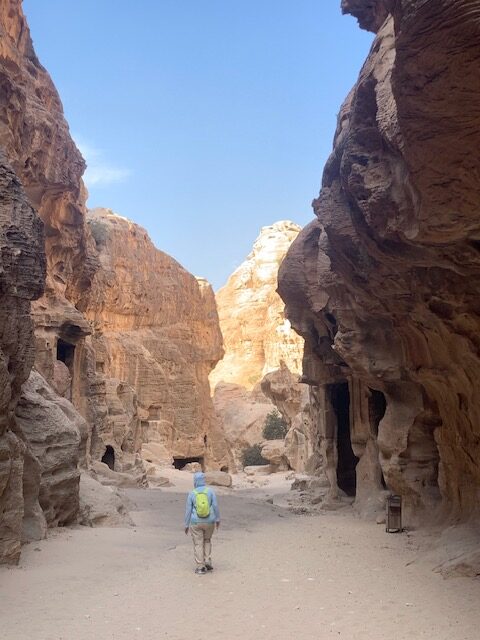
Little Petra is about a 20 minute drive from Wadi Musa. There is no entry fee. We saw a few structures carved out of the sandstone while walking the approximately one kilometer long path through the canyon. The path ends at a shop with a view of a small canyon below.
There were taxi drivers in Wadi Musa that offered to take us to Little Petra. In our opinion, Little Petra is not worth the time if you have already seen Petra.
Park Shuttle
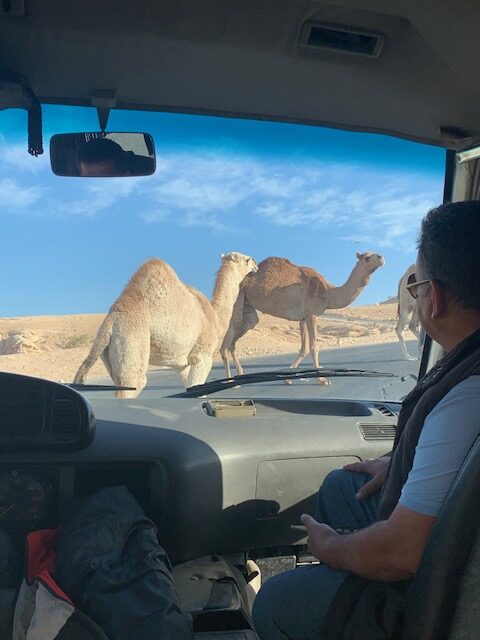
Besides the Petra By The Back Door shuttles, there is another shuttle that the Park provides. It is not shown on the park map but the Visitor Center Information Desk will tell you about it if you ask. This shuttle takes visitors from the parking lot behind the Petra Museum to the Back Exit Road near the Turkumaniyya Tomb. The Turkumaniyya Tomb is about a 20 minute walk from the Qasr al-Bint.
This shuttle runs about every 30 minutes from 7AM to 3PM. It is more like a tourist shuttle as it stops at the village of Uum Sayhoun so that passengers can get off to have a drink or buy souvenirs.
You need to show your park entry tickets to board the shuttle.
Tips
Cash Is King in Jordan
We found that cash is king in Jordan. If you prefer to pay with a credit card, most restaurants charge an additional fee.
How Many Days?
We bought the three day Jordan Pass because we did not have time to research how to explore Petra. In the end, we just needed a two day pass. We did sites 1 (Djinn Blocks) through 13 (Qasr al-Bint), except Site 2, on Day 1, entering the gate at 6:45 AM and were back at our hotel at 3PM. We did Petra By The Back Door on our second day and took the 7AM (first) shuttle behind the Petra Museum. We saw Sites 14 (The Lion Triclinium) and 15 (Monastery) on Day 2 and were done around noon.
If you are young, a hardy hiker, have no problem going up and down steps (meaning ascending to a viewpoint) and are used to the heat, then all the 14 sites within Petra are very doable in one day. The park opens at 6 AM and closes at 5 PM. The Main Trail takes about 1.5 hours one way and it is another 40 minutes (uphill) on the Ad-Deir (Monastery) Trail. We found that the hiking times on the park map Trail Guide is between two to three times generous for a strong hiker and about right for a person who needs a lot of rest going uphill.
How To Get There
We rented a car from the Amman airport as the rate was irresistibly low. The drive from Amman to Wadi Musa took about four hours including a 30 minute stop to buy water and take a nap on a roadside pull-out. The drive was straightforward through highways that pass through about half a dozen villages where we had to slow down.
There were cameras and speed bumps at the villages. Some of the speed bumps were not striped and hard to see so we had to pay close attention. There were also police checkpoints. We only got stopped once but were motioned to go through when they realized we were tourists.
We know Wadi Musa can be reached by public transportation because we talked to other tourists that did not rent a car.
Where To Stay
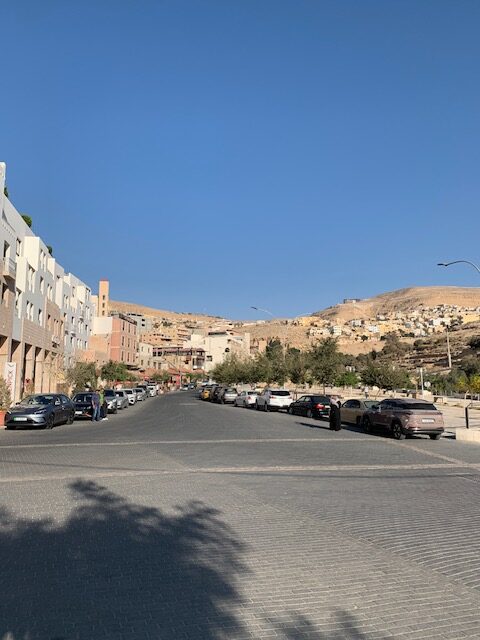
We stayed at the Petra Karam Hotel which is about two kilometers from Petra.
Wadi Musa is built on a mountainside so there is a lot of uphill and downhill walking. It would be best to stay near Petra if you do not have a rental car. There are a few hotels and many restaurants nearby.
How To Get Around
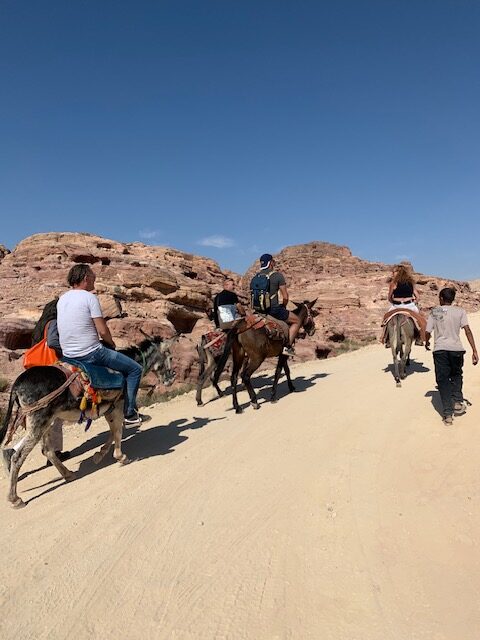
Walking inside the Park is the primary means of getting around. Shuttles were described earlier. There are golf carts and donkeys that locals provide for a fee (they are relentless though).
Within Wadi Musa, there are taxis as well.
Expected Expenses
Prices are in Jordanian Dinar (JOD) and per person unless noted otherwise.
Jordan Pass: 70 (1 day), 75 (2 days) and 80 (3 days). Best to get the Jordan Pass as it includes the Visa on arrival fee. Needs to be purchased on-line prior to arriving in Jordan.
Park Entry: 50 (1 day), 55 (2 days) and 60 (3 days) for non-Arabs (reduced for Arabs).
Petra By Night: 30 (not included with the Jordan Pass. Credit card accepted.
Golf Carts: 10 from Theater (No. 7) to Qasr al-Bint (No. 13), 10 one way. 15 round trip (about a 1 km travel on level ground). Cash only.
Donkeys: 10 from Qasr al-Bint to Monastery, 5 from Qasr al-Bint to Shuttle Bus. Prices are negotiable. Cash only.
4×4 Vehicle to Monastery Trailhead: 5 (one way). Cash only.
Stay Informed
If you want to be notified when we post a new travel story, please enter your email below. We respect your privacy. Your email is used only to notify you of new posts and is never sold or shared with third parties. You can unsuscribe at any time.
Summary
Petra is a major tourist destination due to its stunning, unique rock-cut architecture. The Treasury (Al-Khazneh) and Monastery (Ad Deir) and other structures are carved directly into rose-colored sandstone cliffs. Its allure not only comes from admiring intricate facades but also from exploring canyons, tombs and the evidence of the ancient Nabataean civilization that thrived as a crucial trade hub centuries ago. Petra is a UNESCO World Heritage site and one of the Seven Wonders of the World.